



Social CareAuditing in Residential Family Centres

· 10 min read
How are residential family centres expected to audit? In this article discover what we learnt from the regulations, the standards, centre managers and Ofsted reports, and where we'd like to hear from you.
Having worked in a residential family centre, I know how much responsibility managers carry. One minute they might be interviewing a new member of staff, the next considering a referral, then dashing off to run a team meeting, a parent supervision, or deal with a serious safeguarding concern. In between, they are reviewing assessments, reading observations, checking records and talking to social workers and other professionals.
The job is varied, it’s rewarding, but it’s relentless.
On top of all that, they are responsible for the quality of care families receive, for keeping them safe, and for supporting their staff. Keeping oversight of all of it is a mammoth task. But it is a vital one.
Auditing is one of the ways managers keep the service on track. It brings the information together, helps them look beyond individual records or incidents, and shows whether the service is doing what it says it does. It is how they spot what is working, what is slipping, and where the team can improve.
While building FamilyAxis, we've been speaking to centre managers about how they approach it. The same point came up again and again: auditing takes a lot of time, and they are looking for tools that make it quicker and easier.
Before building anything, I wanted to understand what is actually required. So I went back to the regulations, the National Minimum Standards for residential family centres and Ofsted's social care common inspection framework (SCCIF). This article sets out what I found, and ends with a request for your help.

Key Takeaways
- No prescribed method: the regulations and National Minimum Standards require systems for monitoring and reviewing quality, but don't say how to audit.
- What good looks like: the centres praised for this monitor the quality of records, spot patterns and shortfalls, and can show the action they took.
- What centres were asked to improve: monitoring the quality of records and showing that findings led to action.
- Time is the main pressure: managers told us auditing is very time-consuming, and they want tools that make it quicker and easier.
What does Ofsted expect?
The current Ofsted SCCIF for residential family centres focuses on monitoring, evaluation, management oversight and continuous improvement.
After reading over 90 Ofsted reports for residential family centres, I noticed inspectors often pick up on the same things:
- Are the file audits thorough?
- Do they cover the right records?
- Do the findings lead to action that is followed up?
- Have any key documents been left out?
- Can managers show they know the strengths and weaknesses of the service?
Those questions show what inspectors look for in practice. The legal duties behind them come from the Residential Family Centres Regulations 2002. The regulations set the required systems, not the method.
Two regulations are particularly important for auditing:
Regulation 23 The registered person must establish and maintain a system for reviewing and improving the quality of care at appropriate intervals. The system must provide for consultation with residents, and a report must be provided to Ofsted and made available to residents.
Regulation 25 The registered provider must arrange for a person to visit the centre at least once a month. Visits may be unannounced. The visitor must speak to residents and staff in private, inspect the premises, daily log and complaints records, and write a report. Ofsted requires that report by the end of the following month, even if no families are resident.
The Department for Education's National Minimum Standards add practical detail to those regulations…
What the standards say
Standard 19.2 The manager regularly monitors, in line with the Residential Family Centre Regulations 2002, as amended, all records kept by the centre to ensure compliance with the centre's policies, to identify any concerns about specific incidents and to identify patterns and trends. Immediate action is taken to address any issues raised by this monitoring.
Standard 20.2 There is a system in place to monitor the quality and adequacy of record keeping and take action when needed.
In other words, monitoring is not just reading records. It is noticing patterns and acting on them.
Ofsted also expects leaders and managers to understand the quality of their service, learn from feedback and incidents, identify areas for improvement and take action.
The current Annex A asks for the dates of all Regulation 25 visits in the last 12 months, and an example of changes made as a result. Not the audit form. The change.
In short, the legislation sets the required systems and outcomes but doesn't prescribe a method. Many centres build their own tools, adapt forms from other services or rely on a manager's daily reading. None of that is wrong, but it means each centre is maintaining its own system, and that takes time.
What might a centre audit?
One manager I spoke with reads every observation and log her staff write, every day. An inspector who reviewed her audits described them as thorough. That is a lot of reading, but it is how she keeps a close eye on quality. Other centres sample a set of records each month or quarter, check them against agreed criteria and record the findings and actions. Some do both.
Both help. Daily reading spots issues quickly, while sampling is better for finding themes across cases.
What centres choose to audit depends on their service, policies, priorities and any concerns or trends emerging from practice. Common examples include case files and assessments, observations and direct work, safeguarding and incident records, staff files and training, medication records, and the environment.
If you are not sure where to start, the three broad areas Ofsted uses for inspection are a useful framework. They include the overall experiences and progress of children and parents, how well children and parents are helped and protected, and the effectiveness of leaders and managers (Ofsted, 2026). I have used them as a starting point below.
The questions under each one are suggestions to prompt thinking, not Ofsted requirements.
1. Experiences and progress of families
- Are assessments thorough, balanced and up to date?
- Do observations provide clear evidence of parenting strengths and areas for development?
- Is direct work purposeful and linked to the family's needs?
- Are placement plans and support plans reviewed and updated appropriately?
- Is the child's voice heard and recorded?

2. How well families are helped and protected
- Are safeguarding concerns recorded, escalated and followed up?
- Are incidents and accidents reviewed, with actions completed?
- Are risks regularly reviewed and updated?
- Are notifications made on time?
- Are complaints and family feedback used to improve practice?

3. The effectiveness of leaders and managers
- Do managers know the strengths and weaknesses of the service?
- Are staff training, supervision and development up to date and effective?
- Are outstanding actions tracked and completed?
- Are themes and trends identified across cases and teams?
- Are improvements implemented and reviewed?

What a structured audit can look like
An audit can record the evidence reviewed, the findings and the improvements required. A typical structure looks like this:
- Choose an area to review, for example safeguarding, observations, direct work or assessment reports.
- Agree the criteria for good practice.
- Select a sample across different staff, shifts or families.
- Review the evidence for accuracy, quality, consistency and gaps.
- Record good practice as well as areas for improvement.
- Agree actions with an owner and a realistic date.
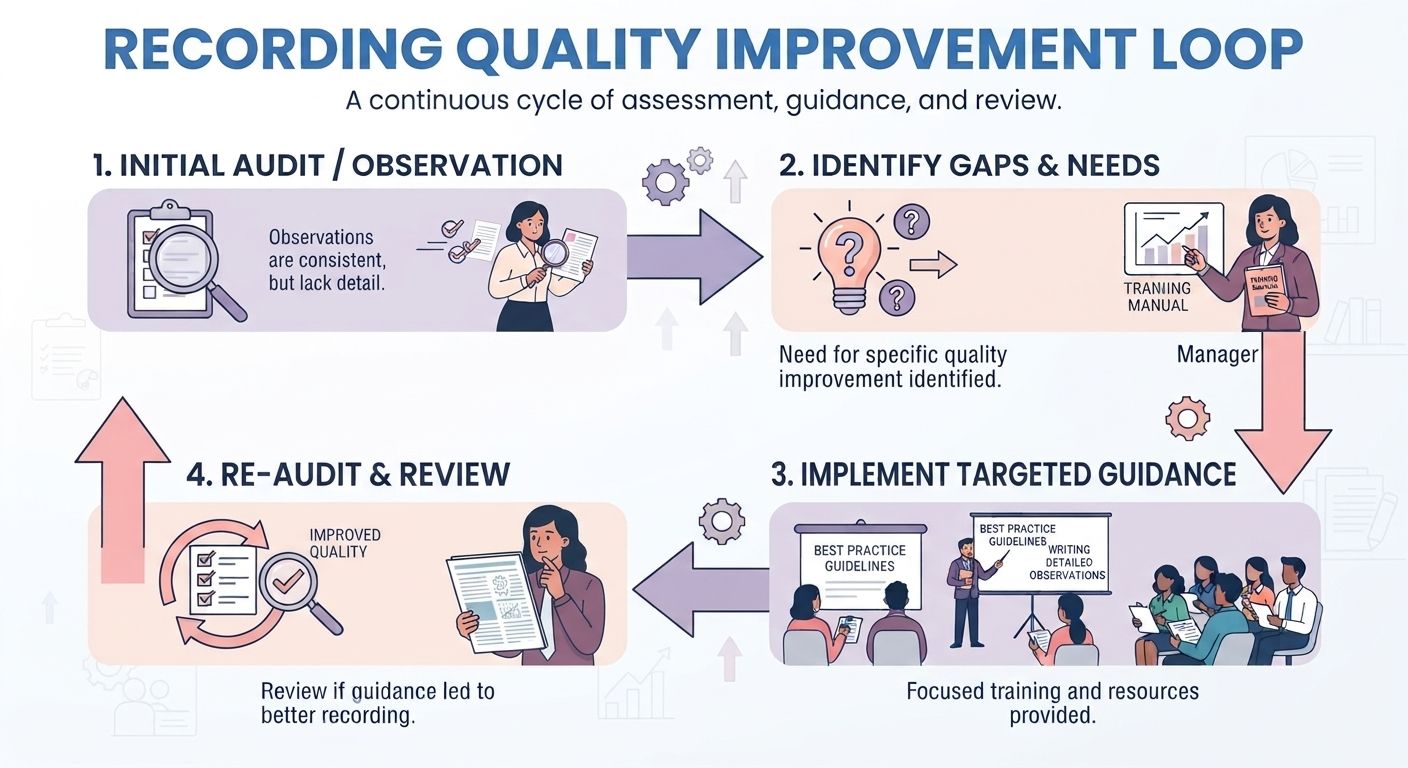
- Review progress to see whether the changes worked.
It also helps to moderate findings with someone else so the judgement is consistent.
For example, an audit might find that observations are completed consistently but don't always contain enough detail to support the assessment. That could lead to additional staff guidance, followed by another review to see whether recording quality has improved.
The Bury Council case file audit form is one example of a structured approach, with ratings, commentary and remedial actions. It was designed for children's social care rather than residential family centres, but the principles are easy to adapt (Bury Council, 2016). For a residential family centre, you could keep the rating and remedial action structure but swap the criteria for assessment quality, observation detail and direct work.
There is also a second record to consider. The audit trail shows who created, edited or viewed a record, when, and what changed.
Where software could help
Managers told me that gathering information from different records, checking outstanding actions and keeping track of what needs reviewing is incredibly time-consuming. I'm not surprised! I really don't know how RFC managers juggle everything. When information is spread across documents, spreadsheets and systems, working out what needs attention can take longer than the audit itself.
Software can't replace professional judgement or decide whether practice is good enough. But it can make information easier to find and help managers keep an overview.
At FamilyAxis, we already have a few tools that can help:
- Recurring tasks: set audits to repeat on a schedule, so reviewing progress doesn't rely on memory.
- Task statuses: staff mark work as ready for review, and managers sign it off, so actions have a clear owner.
- Task dashboards: outstanding actions are in one place, so you can see what's still open.
- Safeguarding in one place: a dedicated area for safeguarding information and related records.
- Staff records, training and supervision: reminders when refresher training or supervision is due, so gaps are visible before an audit finds them.
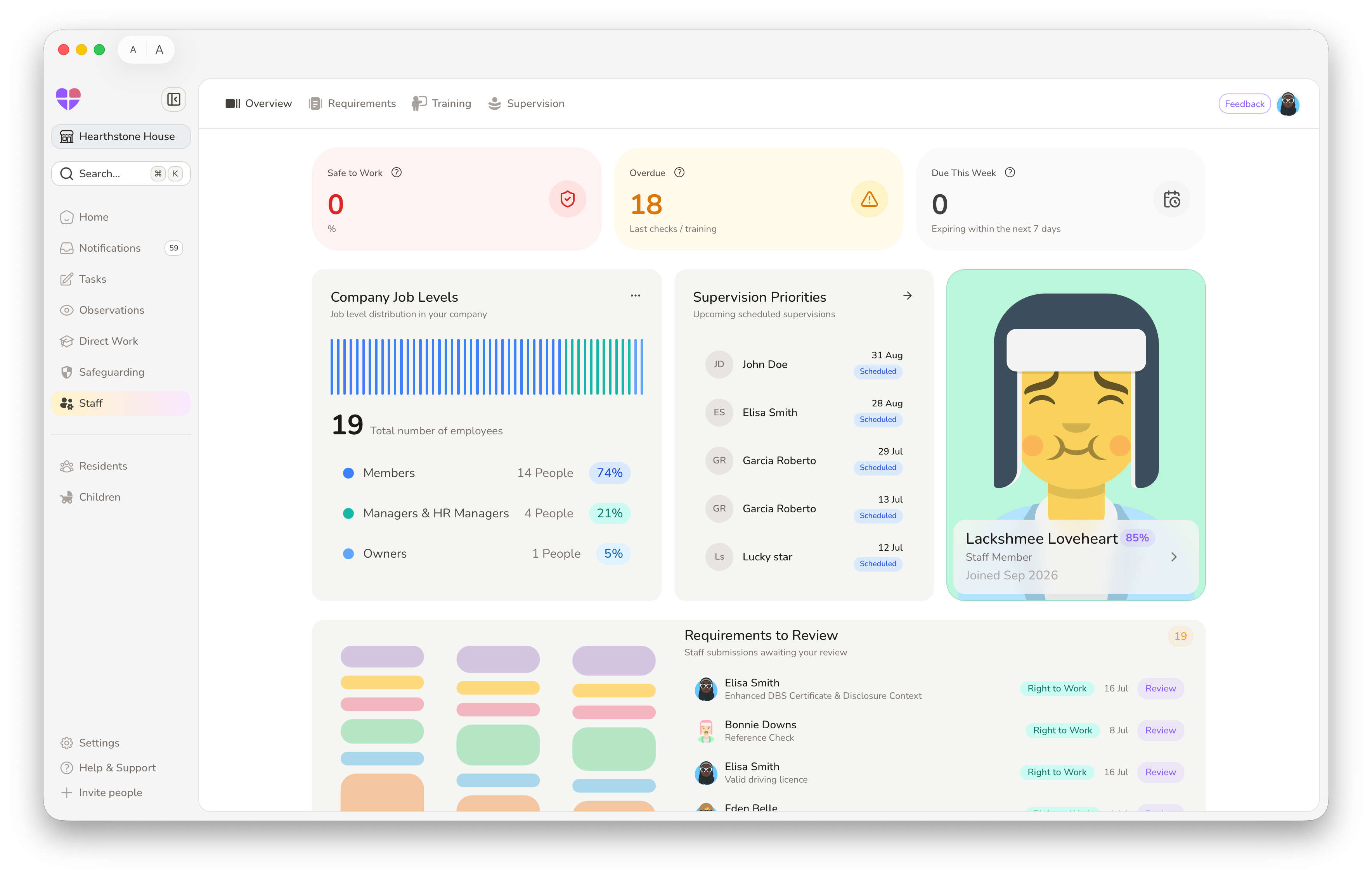
These help in different ways: some with the audit itself, some with the records and oversight around it. But none of them is a dedicated audit tool. We'd like to go further, and we're exploring what a purpose-built audit feature should look like.
Another area we've been working on is an AI assistant that can explore themes across records and logs, helping managers spot patterns and prepare their audits more easily. Managers will be able to ask it questions about their records in their own words, and it will pick out the patterns in the data. They can then use what it finds to inform their professional judgement and write up their reports.
A dedicated auditing page is something else we're exploring, but we won't build it until we've heard more from centres about what would actually help.
Help us get it right
If you audit in a residential family centre, I'd like to hear from you. Three questions would help:
- Is there a tool or feature you've looked for and can't find?
- If you already have a system that works, how does it work, and what is still missing or could be easier?
- Which part of auditing takes the longest?
Email [email protected]. What you tell us will shape what we build.
This isn't a formal study. It's based on reading 99 Ofsted inspection reports for residential family centres, conversations with five centre managers, and the regulations and standards themselves. I couldn't find published articles on how centres approach auditing, so this is my attempt to explain what I found. Out of respect for the centres and managers involved, I haven't named any centres or cited individual reports.
Sources
- Bury Council. (2016). Children's Social Care Case File Audit Form. View source
- Department for Education. (2013). Residential Family Centres National Minimum Standards. View source
- Ofsted. (2026a). Residential Family Centres: Documents for Visits (Annex A). View source
- Ofsted. (2026b). Social Care Common Inspection Framework: Residential Family Centres. View source
- UK Government. (2002). The Residential Family Centres Regulations 2002. View source
- Ofsted. (n.d.). Find an inspection report. View source