



Family Axis SoftwareSupporting Dyslexic Parents in Family Assessment with OpenDyslexic Font

· 6 min read
Could a simple font change make your reports more accessible to the parents you work with? This article explores the research behind OpenDyslexic, the free typeface we've integrated into our report tool, and why we believe accessibility should never be an afterthought.
At FamilyAxis, we believe that the tools professionals use should work for everyone, including the families those professionals are there to support. That's why we made the decision to integrate the OpenDyslexic font into our report tool, giving staff the option to generate PDFs using a typeface specifically designed with dyslexic readers in mind.
Residential family centres work with parents who often have a range of additional needs, and dyslexia is far more common than many people realise. Approximately 10% of the UK population has dyslexia, with around 4% experiencing it severely (British Dyslexia Association, 2024).
For parents navigating a complex assessment process, receiving documentation they can actually read and engage with is not a small thing, it can be the difference between feeling included or excluded from the decisions being made about their family.
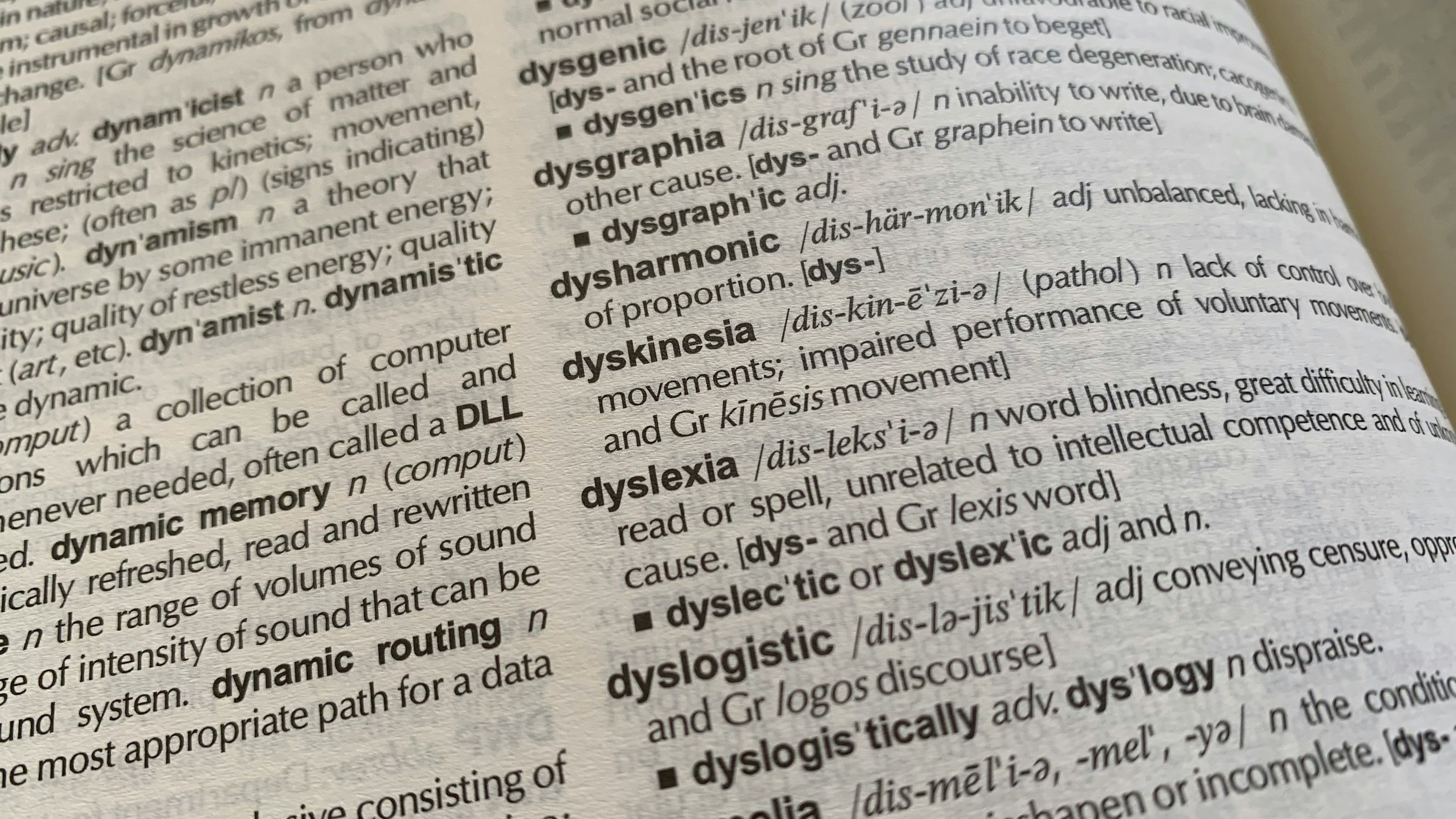
What is OpenDyslexic Font?
OpenDyslexic is a free, open-source typeface created by Abbie Gonzalez and made available at opendyslexic.org. It was designed to address some of the most common visual challenges experienced by people with dyslexia, particularly letter confusion and visual instability on the page.
The font uses heavier, weighted bottoms on each letter, which are intended to provide a clear visual anchor and reduce the likelihood of letters appearing to flip or rotate. Each letter also has a unique shape to help distinguish similar-looking characters, a common source of difficulty for dyslexic readers.
Crucially, it was created and continues to be offered completely free of charge. In a sector where budgets are stretched, that matters. Abbie Gonzalez built this out of a desire to make something useful and accessible, and we think that spirit deserves to be supported.
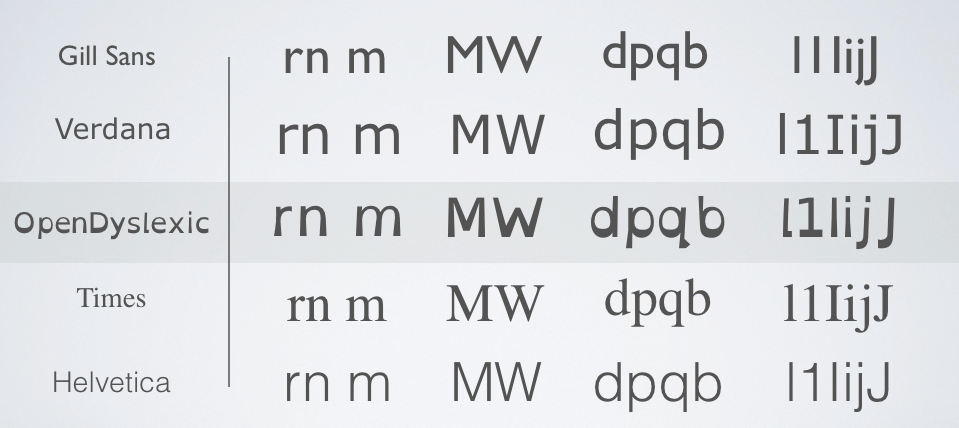
Image courtesy of opendyslexic.org
What Does the Research Say?
The research on dyslexia-specific fonts is still developing, but there is meaningful evidence that OpenDyslexic can make a real difference for some readers.
A 2019 study by Franzen, Stark and Johnson, published in the Annals of Eye Science, found that OpenDyslexic improved reading comprehension in both dyslexic and non-dyslexic adults, with the improvements being larger for those with dyslexia. The researchers also found that the font produced a different visual reading strategy, including reduced visual search intensity, suggesting it may reduce the cognitive effort required to process text.
This is supported by a 2023 Turkish study published in TAY Journal, which found OpenDyslexic to be effective in increasing reading fluency and comprehension across all participants, with improvements in reading speed, accuracy, prosodic reading and comprehension skills. It is worth noting that this study was conducted with 10-year-old children, and results may have differed had it been explored with adults.
It is important to recognise that not all research has found positive results, and it would be misleading to suggest otherwise. Diliberto and Wery (2016) tested OpenDyslexic against Arial and Times New Roman and found it actually reduced reading speed and accuracy, with none of the students preferring it.
The honest picture is this: dyslexia is not a single, uniform experience. It presents differently in every person. But where there is evidence of benefit, and where the cost of offering it is zero, it is worth making available.

Why We Integrated It
If there is a chance it helps even some of the parents you work with, it is worth offering. And while the research is still developing, the weight of evidence does lean towards OpenDyslexic being beneficial, so we feel confident that this is a worthwhile addition.
Residential family centres have a duty to support parents with additional needs, and accessibility should not be an afterthought. The National Minimum Standards expect residential family centres to take the individual needs of families seriously. Offering documentation in a format that is more accessible to dyslexic readers is a simple, practical way to demonstrate that commitment.
The font costs nothing. It takes seconds to select. And for a parent who has spent years struggling with text that feels jumbled and difficult, being handed a document in a format that feels easier to read can be a small but meaningful act of consideration.
We also want to recognise Abbie Gonzalez and the OpenDyslexic project for making this freely available to the world. Building something useful, sharing it openly, and asking for nothing in return is a genuinely kind thing to do, and it has found its way into products used by millions of people, from Amazon Kindle to Wikipedia. We are glad to be among them.

How to Use It in FamilyAxis
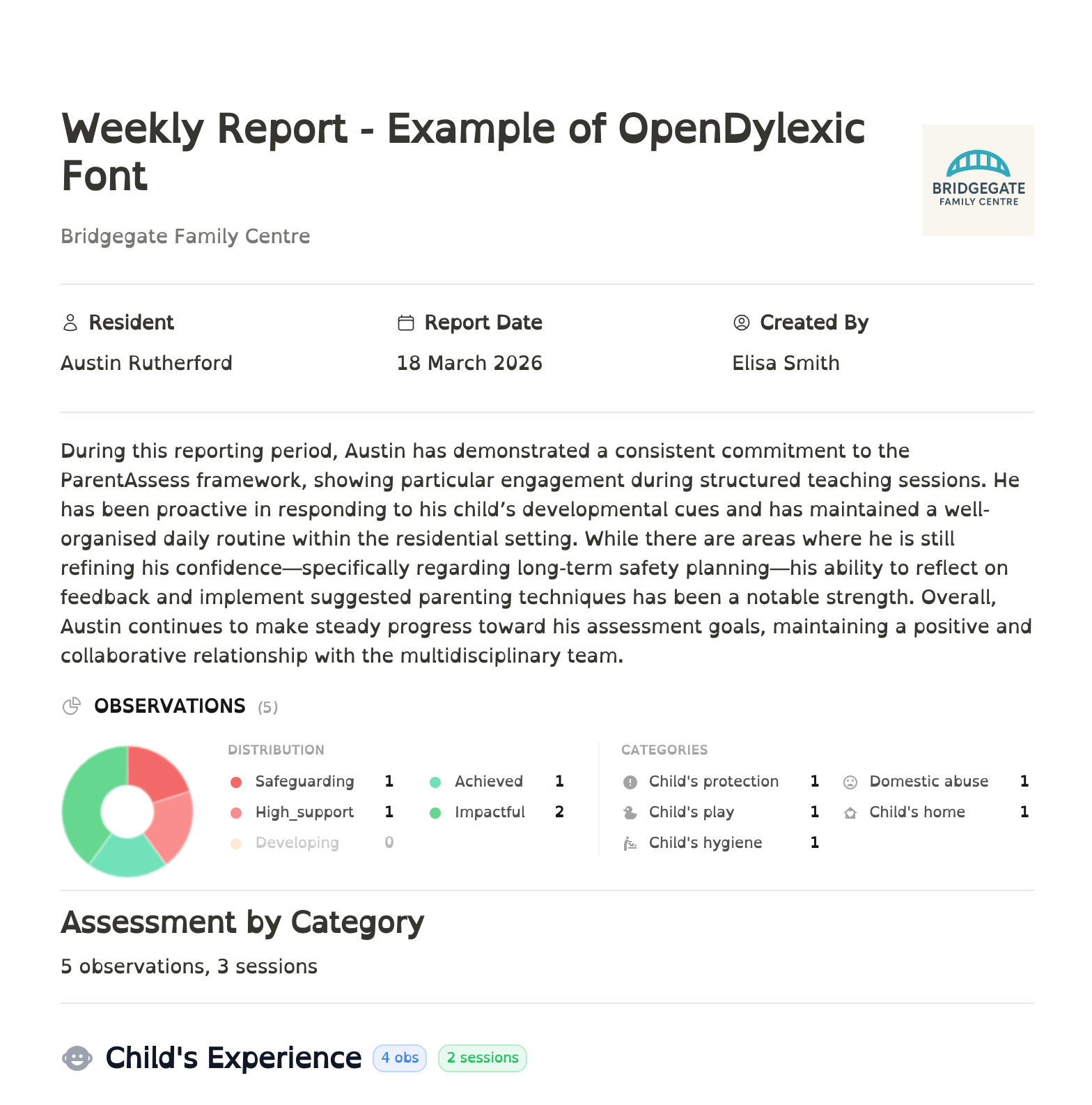
When generating a report PDF in FamilyAxis, you will find the option to switch the font to OpenDyslexic before exporting. It is a simple toggle, no extra steps, no additional cost. If you know a parent has dyslexia, or if a parent has mentioned difficulty reading standard documents, it is worth offering them a copy in this format.
As always, the best approach is to ask the parent directly what works for them. Accessibility is most effective when it is personalised.
A Small Change, A Meaningful Difference
The research may be evolving, but the principle is straightforward. Supporting parents with additional needs is not just good practice, it is part of your duty of care. Wherever we can build tools that make that easier, we will.
You can find out more about OpenDyslexic and download the font for your own use at opendyslexic.org.
Sources
- Department for Education. (2013). Residential Family Centres National Minimum Standards. Retrieved March 18, 2026, from https://assets.publishing.service.gov.uk/media/5a7574c7ed915d731495a184/2013_Residential_Family_Centres_NMS.pdf
- Franzen, L., Stark, Z., & Johnson, A. (2019). AB004. The dyslexia font OpenDyslexic facilitates visual processing of text and improves reading comprehension in adult dyslexia. Annals of Eye Science, 4, AB004. https://doi.org/10.21037/aes.2019.ab004
- Gonzalez, A. (n.d.). OpenDyslexic. OpenDyslexic.org. Retrieved March 18, 2026, from https://opendyslexic.org/
- Karatay, N., & Ünal, E. (2023). The Effect of OpenDyslexic Font on Fluent Reading and Reading Comprehension Skills of Students with Dyslexia. Türk Akademik Yayınlar Dergisi, 7(1), 232–264. https://doi.org/10.29329/tayjournal.2023.537.11
- Wery, J. J., & Diliberto, J. A. (2016). The effect of a specialized dyslexia font, OpenDyslexic, on reading rate and accuracy. Annals of Dyslexia, 67(2), 114–127. https://doi.org/10.1007/s11881-016-0127-1