



Social CareStaff Supervision and Wellbeing in Residential Family Centres

· 10 min read
How do residential family centres look after the people who look after families? Supervision is a statutory requirement in these settings, but it is also something much more human than that. This article explores what the National Minimum Standards actually require, what good supervision looks like, and why looking after staff is part of looking after families.
Supervision is one of those things that everyone agrees is important and yet, in practice, it can be one of the first things to slip when things gets busy. A cancelled session here, a rescheduled one there, and suddenly months have passed without a conversation about how you’re doing.
In residential family assessment centres, that matters more than most people realise. The people working in these settings are exposed to complex trauma, heavy decisions and emotionally demanding relationships, day in and day out. Night shift workers face an additional layer of challenge that is rarely spoken about openly. Disrupted sleep, isolation and the physical toll of working through the night can affect mood, anxiety levels and overall health in ways that compound the emotional weight of the job. I saw this first hand among colleagues, and felt it myself.
Without proper support structures in place for all staff, that toll can build up. It can put additional strain on staff and lead to burnout, making it harder to maintain consistent staffing and may affect the quality of care children and families receive.
This article looks at what the National Minimum Standards requires when it comes to supervision and staff support, what genuinely good supervision looked like in a centre I worked in, and why investing in the wellbeing of your team is not a distraction from the work of keeping children safe. It is part of it.
Key Takeaways
- Supervision is statutory, not optional. The National Minimum Standards require that all staff receive regular supervision from appropriately qualified and experienced people, and that the registered manager has supervision too.
- Good supervision covers more than casework. It should include reflection on practice, training needs, team dynamics, and going through each family systematically.
- Staff wellbeing is a safeguarding issue. Burnout, vicarious trauma and compassion fatigue directly affect the quality of assessments and the safety of children. Looking after staff is looking after families.
- Culture matters as much as process. The best supervision structure in the world will not work if staff do not feel safe enough to be honest in the room.
- Supervision applies to everyone. Bank and agency staff working with families are entitled to it too, regardless of contract type.

What the Standards Actually Say
The National Minimum Standards for Residential Family Centres, published by the Department for Education, set out 21 standards that govern how residential family centres operate. Two of those deal directly with staff: Standard 16, which covers training, development and qualifications, and Standard 17, which covers staff support and supervision.
Standard 17 is short but clear. It states that the employer should be fair and competent and offer good support. All staff, volunteers and the registered manager should be properly managed, appraised and supported, with access to advice and guidance including from external specialists. Staff should receive regular supervision from appropriately qualified and experienced people. The Residential Family Centres Regulations 2002 make this a legal requirement, not just a matter of good practice.
The word "regular" matters. The standards do not specify a frequency, but the expectation is that supervision is built into the rhythm of the centre, not squeezed in when time allows. Standard 16 adds that staff should have access to good quality learning and development opportunities, including induction, post-qualifying and in-service training, and that the programme should be evaluated and updated on an ongoing basis.
Working Together to Safeguard Children reinforces both standards, stating that effective supervision:
"Can play a critical role in ensuring a clear focus on a child's welfare" (HM Government, 2026, p. 61), and that practitioners should be given "Sufficient time, funding, supervision, and support to fulfil their child welfare and safeguarding responsibilities effectively" (HM Government, 2026, p. 111).
The message is consistent across all three frameworks. Supervision is not a management extra. It is part of how teams are supported and children are kept safe.
What Good Supervision Looked Like in Practice
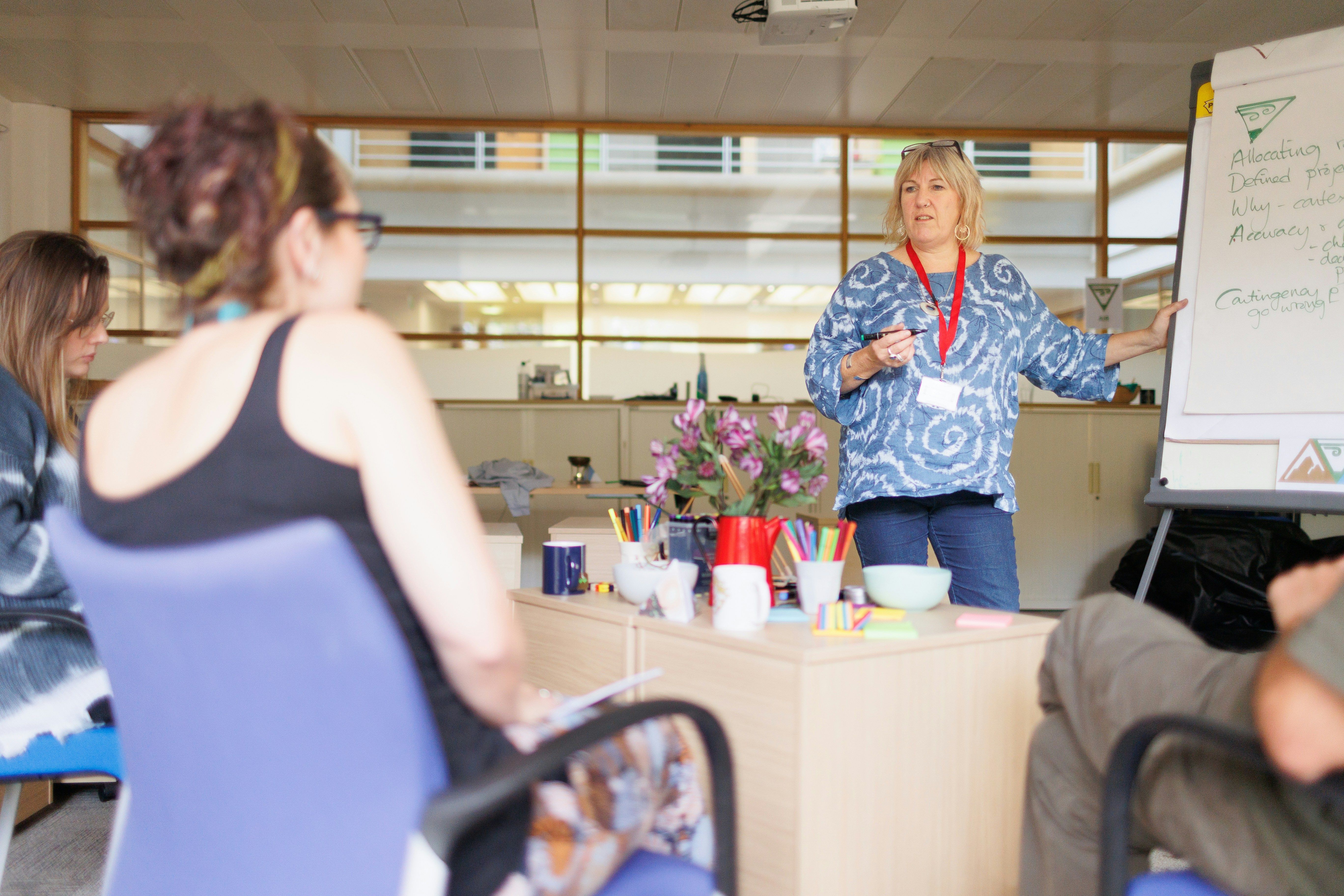
In the residential family centre where I worked, supervision was taken seriously. We had a session every six weeks, regardless of how many shifts we had worked. Even bank staff were offered supervision on the same schedule. That consistency mattered. It sent a message that supervision was not something you earned by doing enough hours, it was something you were entitled to because you were working with families.
Each session followed a structure that covered:
- What we thought we had done well, a chance to reflect on practice and acknowledge what was working.
- What we would like to improve on, and any training we wanted, an honest conversation about gaps and development needs, fed directly into the quarterly training programme.
- How we felt about the team and the processes, space to raise concerns about how the centre was running, not just how we were performing individually.
- Going through each of the families, a systematic review of every family we were working with, making sure nothing was being missed.
I found the supervision helpful. It was a space where I could be honest about what I was struggling with, what I was unsure about, and share ideas about how the service could improve.

Training That Backed It Up
Supervision did not exist in isolation from the rest of our professional development. It was supported by quarterly training, which was also genuinely useful. Sessions were led by different members of the team. Our therapist would run sessions on the science of trauma and the nervous system, our social worker would bring the on-the-ground reality of what trauma looks like in families, and sometimes other team members with extensive experience in social care would lead them too.
This connection between supervision and training was important. Supervision identified what we needed to learn, and training provided it. One without the other would have been half a system.

Even Clinicians Struggle to Get This Right
Around the same time I was working in the centre, I was studying supervision as part of my psychology degree. I remember my lecturer, a clinical psychologist, telling us that even in her role she was entitled to regular supervision but rarely received it.
That stayed with me. If a qualified clinical psychologist could not reliably access the supervision she was entitled to, it tells you something about how rare and valuable it is for a residential family centre to deliver it consistently. It tells you there is sometimes a gap between what the standards require and what happens in reality, and that gap exists across professions where there is never enough time and the needs of staff can be put on the back burner
Debriefing and Counselling: What Happened After Difficult Incidents
Working in a residential family centre means encountering serious incidents, things that are distressing, frightening and emotionally heavy. How management respond after those incidents is just as important as how they respond during them.
In my experience, we were offered debriefing with a member of the management team after any serious incident. This was not something you had to ask for. It was offered to you, though you were not expected to take it up if you didn't feel you needed it. We were also put in contact with a counselling service we could use independently.
This matters because the alternative is that staff carry the weight of what they have witnessed alone. Over time, that weight becomes vicarious trauma, the emotional residue of exposure to other people's suffering. It can lead to burnout, compassion fatigue and eventually people leaving the sector entirely.
The National Minimum Standards require that employers offer good support and that staff have access to advice, including from external specialists. A counselling service and a debriefing protocol are practical expressions of those requirements.
Culture: The Thing You Cannot Mandate
Here is the part that no standard can capture. We had a great team and we would ask each other for help and advice constantly. The management were approachable and made you feel like you could go to them about anything. That culture made a difference, possibly more than any formal process.
You can have the best supervision policy on paper. You can schedule sessions every six weeks, provide training every quarter and offer counselling. But if a staff member walks into supervision and does not feel safe enough to say "I am struggling with this family" or "I made a mistake and I am worried about it," then the system is not working.
Culture is built in the small moments. It is the manager who notices you seem off and asks if you are okay. It is the colleague who sits with you after a difficult observation without being asked. It is the team that treats questions as a sign of engagement, not incompetence.
In my experience, the centre created that culture deliberately. They employed staff who were curious and passionate about the work. Many of us were studying alongside our roles, which brought fresh ideas and energy into the team. The management made themselves accessible. And the supervision process itself was designed to be reflective, not purely managerial.

Closing the Loop: From Supervision to Action
One thing I noticed in my own experience was that supervision could sometimes feel like a conversation that disappeared into the ether. You'd raise something, agree on a next step, and then weeks later it was unclear whether it had been recorded accurately or whether it had reached the right people. Not out of bad faith, just the reality of a busy centre where information can get lost between people and systems.
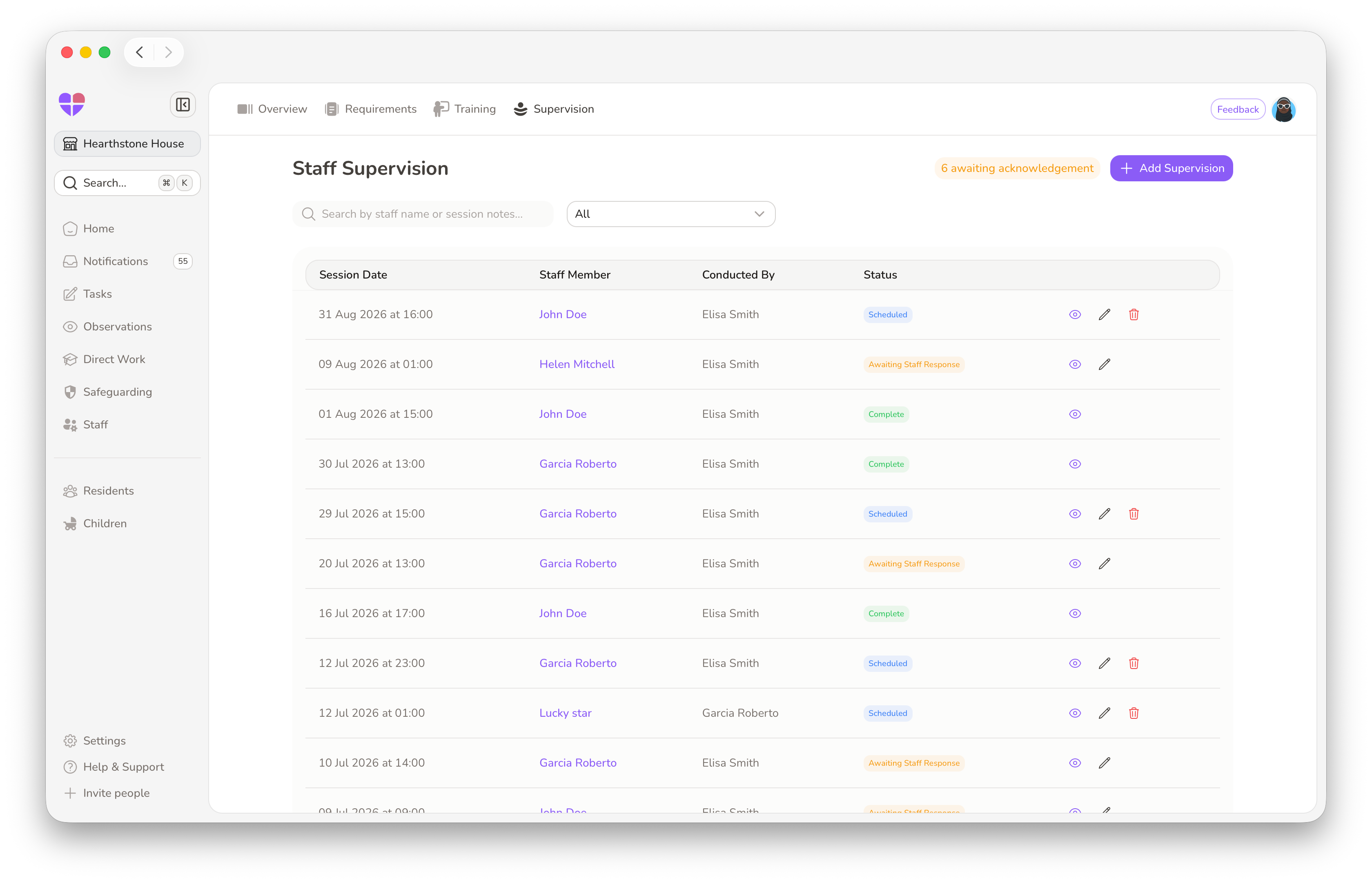
That stayed with me when we were building FamilyAxis. The supervision tool we developed requires the supervisee to review the notes and confirm they are happy with how the session has been recorded. If something important has been missed or recorded inaccurately, they can flag it. The record then sits directly in the staff member's profile, so it is easy to find and refer back to when needed. It is a small thing, but it closes the loop in a way that protects both the staff member and the manager, and creates a record that everyone has agreed on.
Conclusion
When I think back to the centre where I worked, the thing I remember most is not the paperwork or the assessments. It is the feeling that I was supported. That if something went wrong, someone would be there. That if I was struggling, I could say so without fear. That the team around me cared about the families and about each other.
The National Minimum Standards give us the framework. They tell us supervision must happen, that staff must be supported and that training must be ongoing. But frameworks only work when people believe in them. The best centres are the ones that treat supervision not as a management task but as a professional right, something staff are entitled to because the work they do demands it.
If you are managing a centre, be curious: do you think your team feel comfortable being honest during their supervision sessions? If you're not sure, that might be worth exploring.
Because looking after the people who look after families is not a distraction from the work. It is the work.
Sources
- Department for Education. (2013). Residential Family Centres National Minimum Standards. Retrieved August 18, 2026, from https://assets.publishing.service.gov.uk/media/5a7574c7ed915d731495a184/2013_Residential_Family_Centres_NMS.pdf
- NSPCC. (2013). Vicarious trauma: the consequences of working with abuse. Retrieved August 18, 2026, from https://www.plymouthscb.co.uk/wp-content/uploads/2022/03/research-briefing-vicarious-trauma-consequences-working-with-abuse1.pdf
- UK Government. (2002). The Residential Family Centres Regulations 2002. In https://www.legislation.gov.uk. Retrieved August 18, 2026, from https://www.legislation.gov.uk/uksi/2002/3213/contents
- UK Government. (2026). Working together to safeguard children 2026. Retrieved August 18, 2026, from https://assets.publishing.service.gov.uk/media/69fb1c28d0e316a40f269a5b/Working_together_to_safeguard_children_2026_a_guide_to_multi_agency_working.pdf