



Social CareThe Child's Voice in Assessments: 3 Techniques Practitioners Can Use Today
· 10 min read
Do you know what your assessment is capturing about the child? In residential family assessment, children communicate constantly, even before they can speak. Here are three practical techniques assessors can use to make sure the child's voice is genuinely heard and recorded.
When we talk about family assessments in Residential Family Centres, we talk a great deal about parenting capacity. Can this parent keep their child safe? Can they meet their child's needs? But there is a question that can quietly get lost in the process: what is this actually like for the child?
Children, including babies, are not passive subjects in an assessment. They are experiencing it. They are communicating constantly. And it is the job of assessors, to listen to what they are telling them, even when they cannot yet speak.
Research by Balsells et al. (2017) confirms what many experienced practitioners already know: children's voices frequently remain invisible in child protection and family welfare processes, and the younger the child, the greater the risk that their lived experience goes unrecorded. For pre-verbal infants especially, this is not because they have nothing to say. It is because we have not yet developed the habit of tuning in to the way they say it.
Below are three practical techniques that can help teams capture and communicate the child's voice meaningfully, drawn from established practice frameworks and from my own experience working in a residential family assessment centre.
Key takeaways:
- Writing feedback from the child's perspective shifts how parents engage with observations
- A Day in the Life written in the child's voice surfaces concerns that clinical language can miss
- A "good baby" who never cries is not always a well-cared-for baby; passivity can signal a learned response to unmet needs
- Detailed child-centred records have lasting value long after an assessment ends
1. The Voice of the Child Section in Feedback
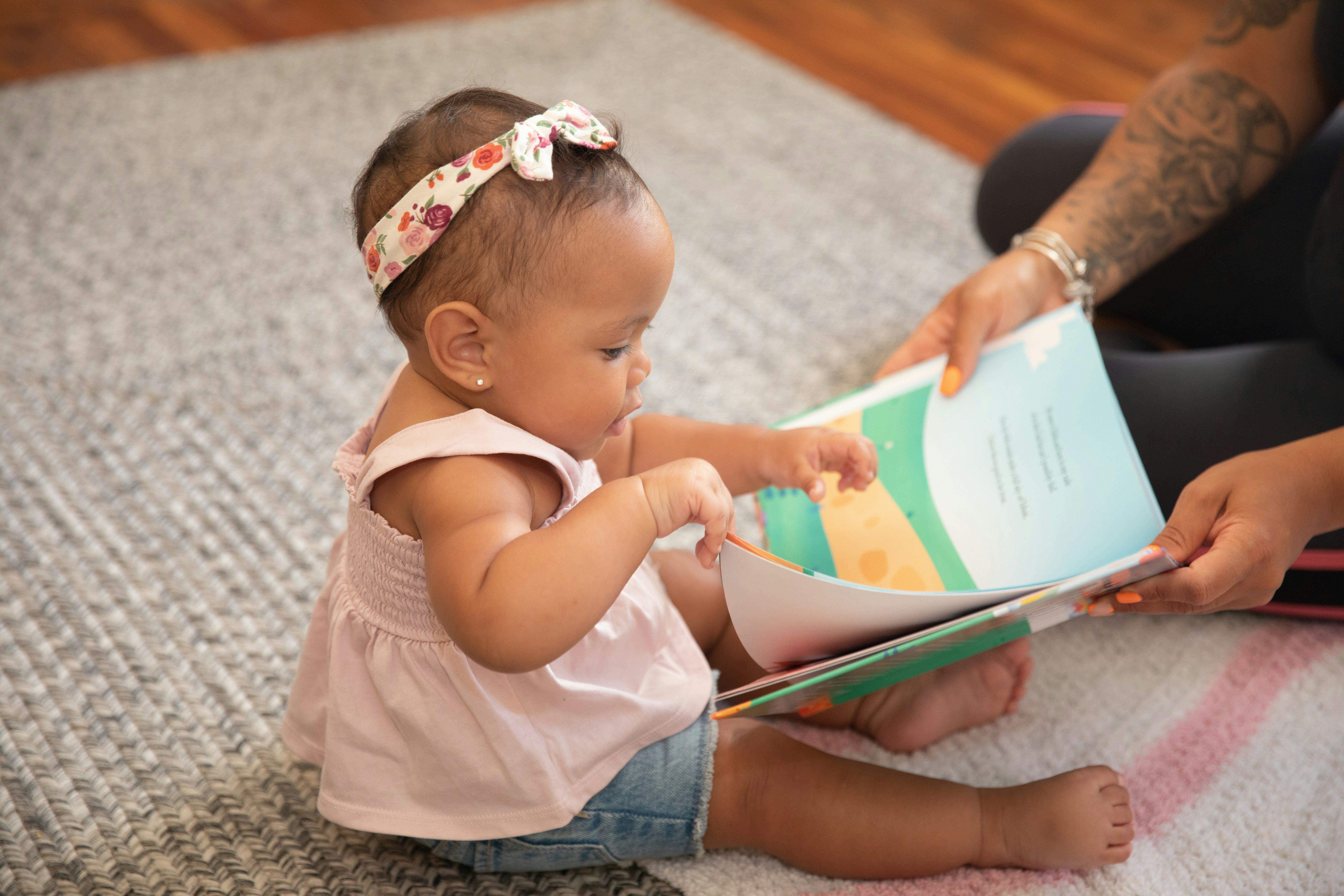
At the end of each shift, whether at the close of the day or following the night shift, parents in residential assessments typically receive feedback from their key worker. This is standard practice. What is less common, but enormously powerful, is including a dedicated Voice of the Child section within that feedback.
In our practice, we wrote this section in the first person, from the child's perspective. Rather than a clinical observation ("Baby appeared settled but made limited eye contact during feeding"), we wrote it as if the child themselves were reflecting on their day:
"Today I felt a little unsettled. I really liked it when Mummy held me close after my bath. That felt safe and warm. When I was feeding I felt a bit tired and I turned my head away, but I loved looking at Mummy's face when she sang to me."
This approach does several things at once. For parents, it shifts the frame entirely. Suddenly they are not being assessed from the outside; they are invited to consider what their baby's inner world might look like. For multi-disciplinary teams reviewing records, it makes the child's experience vivid and impossible to overlook. And for the record itself, it creates the kind of rich, child-centred documentation that the NSPCC (2024) describes as best practice: recording not just what a child did, but "what the child sees, hears and experiences on a daily basis."
Writing from a child's perspective requires judgement and care. It should be grounded in observed behaviour and never fabricated or used to dramatise. But when done well, it is one of the most effective tools for keeping the child at the centre of an assessment.
2. A Day in the Life, Written in the Child's Voice
The second technique builds on a well-established social work framework. The "Day in the Life" model, developed by Professor Jan Horwath at the University of Sheffield, asks practitioners to map out the lived experience of a child across a full 24-hour cycle, covering what their day actually looks and feels like from waking to sleeping. The model aims to help practitioners "focus on the child's lived experience" and identify both strengths and areas of concern in relation to neglect and parenting capacity.
In residential assessment, we took this a step further. Rather than writing the Day in the Life as a third-person observation ("At 7am the family woke and the mother prepared a bottle"), we wrote it entirely from the child's perspective. Practitioners would observe the family closely across the full day and then construct a detailed, first-person narrative:
"I woke up before Mummy did. I made some sounds and waited. After a while I stopped because nobody came. When Mummy did come in she looked tired and didn't smile at me much. I like it when she smiles at me; it makes me feel good inside. At breakfast time..."
This format forces the writer to sit imaginatively inside the child's experience, which in turn surfaces gaps and concerns that can be harder to articulate in clinical language. When a social worker or court reads "the parent was slow to respond to the infant's cues," it registers differently from reading the same event from the child's point of view.
For babies and pre-verbal children, this obviously requires skilled inference from observation. The writer is not inventing the child's feelings. They are translating observed behaviour and interaction patterns into the most honest account they can construct of what that child's day felt like. Birmingham's Voice of the Child Practice Guidance makes clear that assessments should describe observed behaviour alongside "what the child sees, hears and experiences," and that observations should be clearly distinguished from inference (Donovan, 2018). Written carefully and transparently, the first-person Day in the Life does exactly this.
3. Reading Baby Cues and Knowing What They Mean
The third technique is not a documentation tool but a skill: the ability to read infant body language and non-verbal communication accurately, and to know which cues may indicate a concern about attachment.
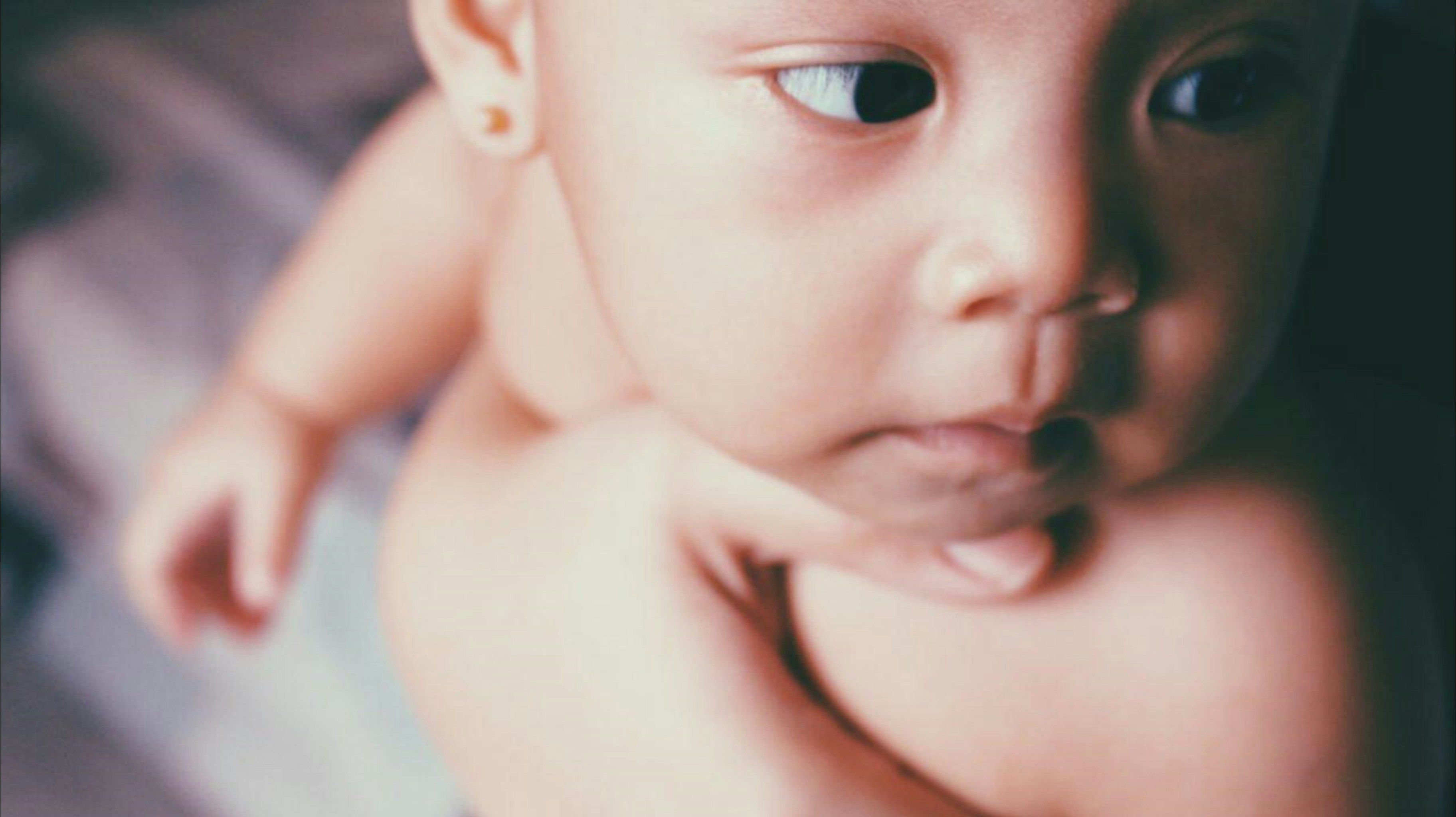
Because the majority of families in Residential Family Centres have babies, assessors need specialist knowledge in this area. Infant communication is constant and rich. Babies signal hunger, discomfort, engagement, and the need for rest through facial expressions, body posture, movement, and eye contact, long before they can speak a word (NHS, n.d.). Learning to read these signals is not just useful for assessors; it is fundamental.
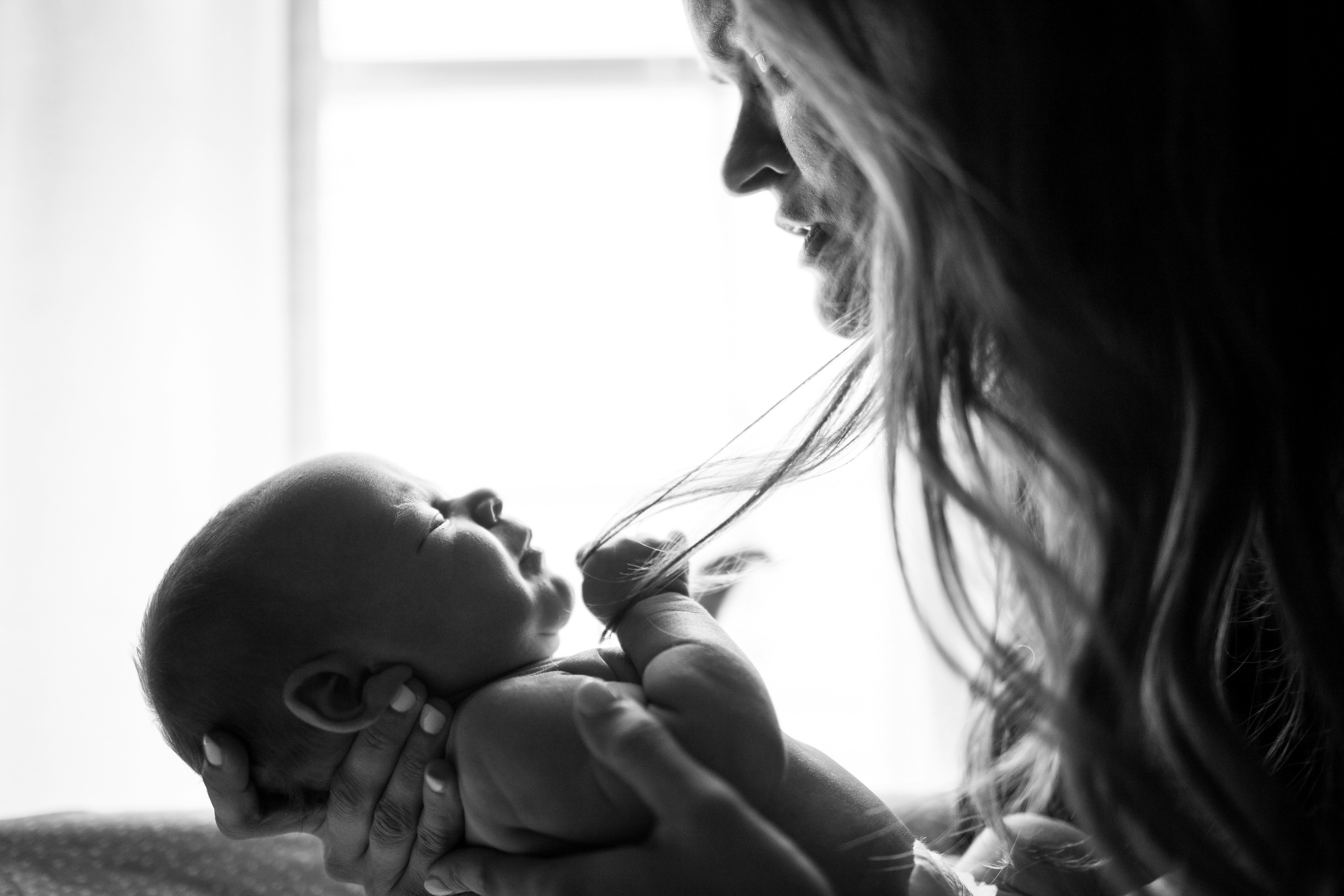
Two particular patterns are worth highlighting, because they are frequently misread:
Eye contact avoidance during feeding.
When a baby consistently avoids eye contact with their parent during feeding, turning their head away, looking to the side, not engaging with the parent's gaze, this can be a significant indicator. Secure attachment is associated with mutual gaze during caregiving moments: babies with a secure bond are drawn toward their caregiver's face (Lomax, 2021). Persistent avoidance may suggest the baby is already adapting to a caregiving environment where interaction is not consistently warm or responsive, and that the attachment forming between parent and child is insecure (Salomonsson, 2017). This does not mean the parent is failing. It means the observation warrants further attention and conversation, not a tick in the "settled baby" column.
The "good baby" who never cries.
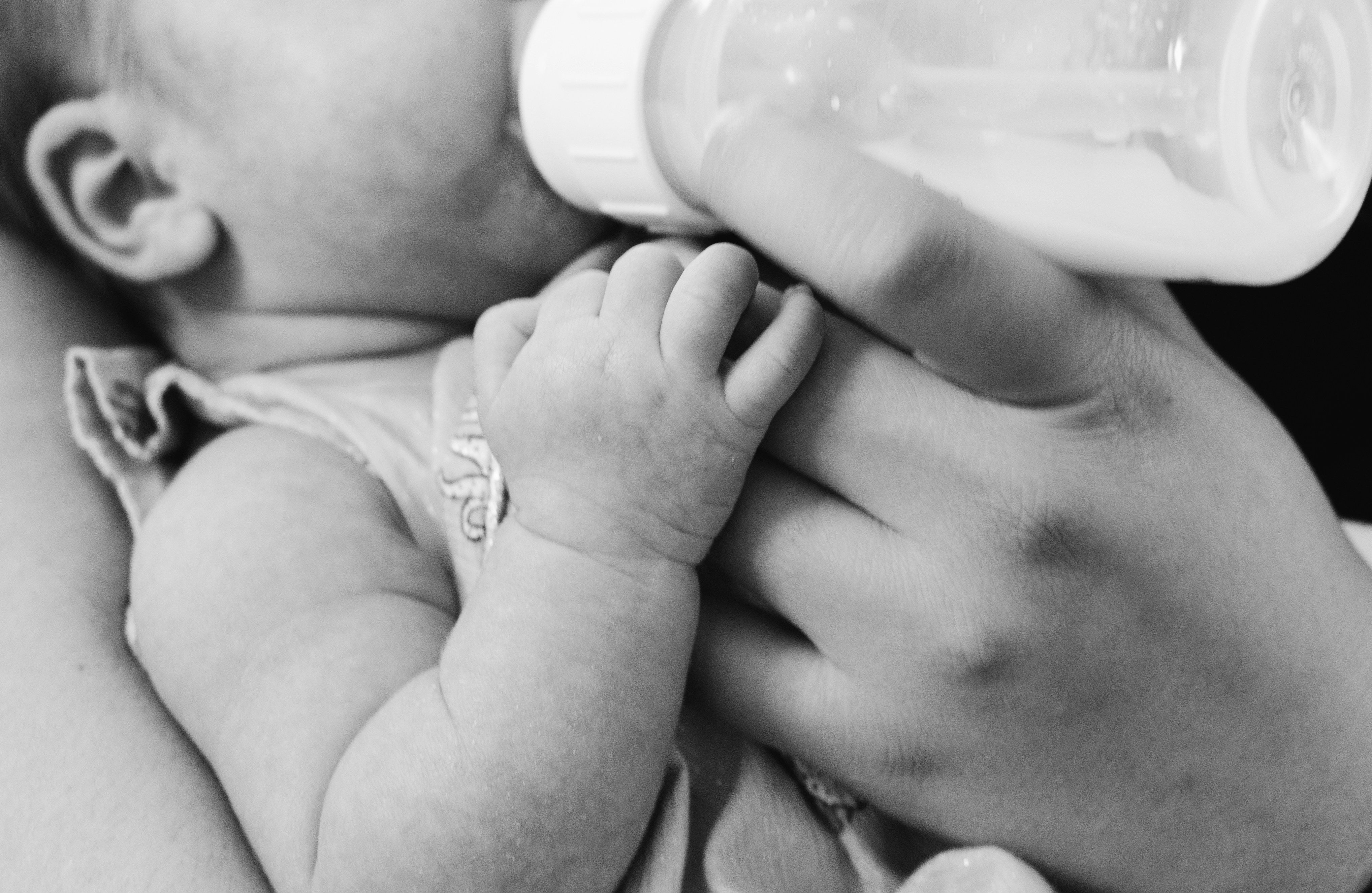
This is perhaps the most important misreading to address, because it appears positive. A baby who lies quietly, rarely fusses, and does not demand attention is often described informally as "a good baby" or "an easy baby." In the context of an assessment, it should instead prompt questions. A systematic review from the royal college of paediatrics and child health (RCPCH) confirms that in infants aged 0 to 20 months, neglect is associated with "avoidant and insecure attachment and passive or withdrawn behaviour" (RCPCH, 2022). A baby who has learnt that crying and signalling does not bring a response, because responses have been inconsistent, frightening, or absent, may stop asking. They have, in a very early and profound way, begun to suppress their own needs. As Pelini (2024) explains in a parent map article, "a child who is accustomed to being ignored... learns not to ask for help." Passivity is not contentment. Professionals must be trained to hold this distinction.

For assessors, the skill is twofold: first, being able to observe and record these cues accurately; and second, being able to explain their significance clearly to parents and teams. A parent who understands why their baby's eye contact during feeding matters is a parent who can be supported to change. A parent who is never told will continue to misread the signal, and so will every professional who reviews the record without that context.
Why Documentation Matters: FamilyAxis's Child Profile and Life Story Feature
All three of these techniques share something in common: they generate detailed, nuanced, child-centred records. And those records matter enormously, not just during the assessment, but long afterwards.
At FamilyAxis, we developed our dedicated Child Profile and Life Story feature with exactly this in mind. In the cases where a child is removed and placed with a new caregiver, the observations gathered during an assessment are among the most important documents that exist about that child's earliest experiences. A new carer may know very little about the child when they first arrive. What comforts them, what they are eating or drinking, what milestones they have reached, what their sleep patterns are like, what has frightened or soothed them. The rich, child-centred notes gathered throughout an assessment can help bridge that gap, giving a caregiver a real head start in understanding and responding to the child in their care.
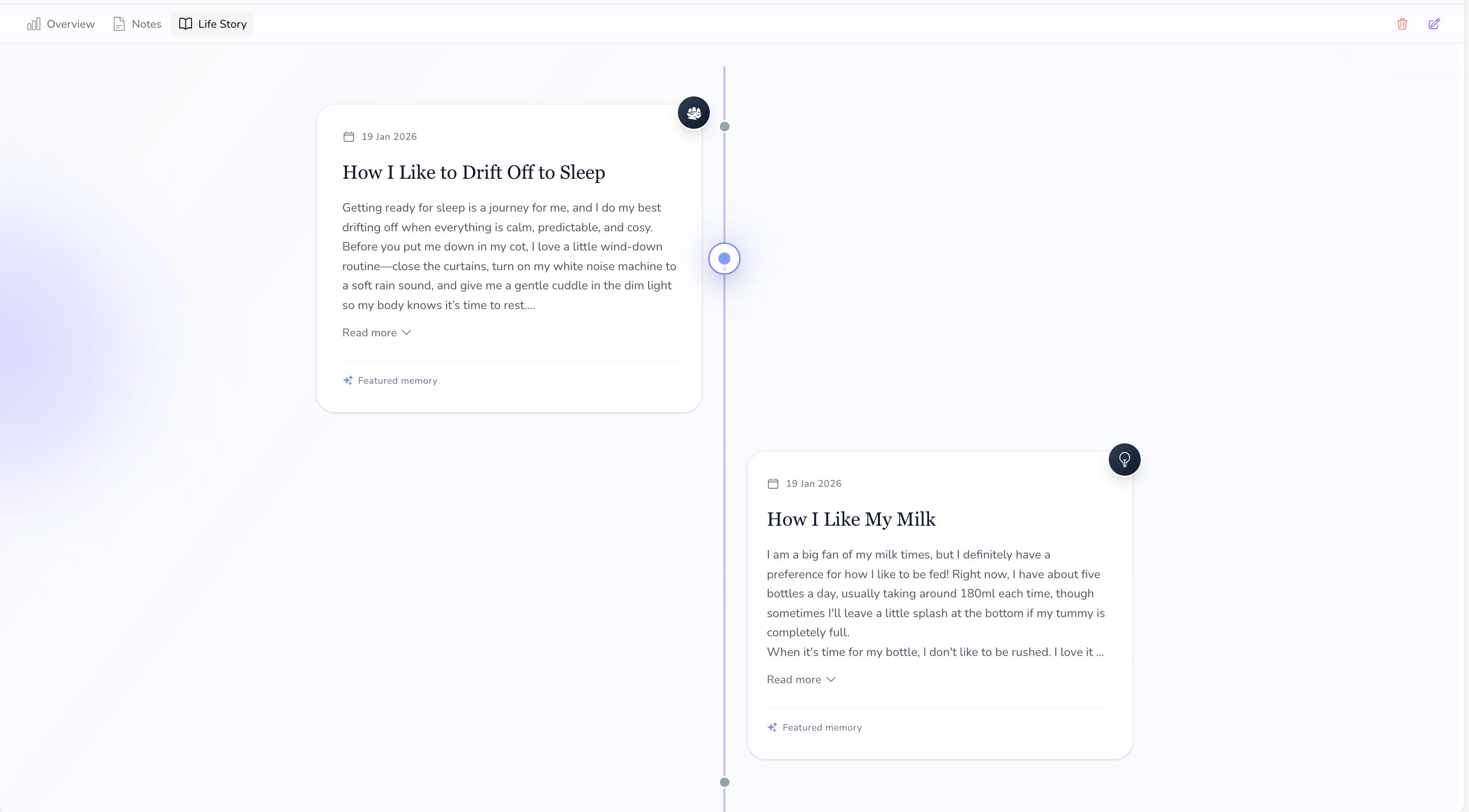
Equally important, that information belongs to the child. When they are older, as many care-experienced young people choose to do, they may wish to access their records and understand their early life. A well-kept life story, written with the child at the centre, is a gift to their future self. Our Child Profile feature makes it straightforward to record, store and, when the time comes, share that information in a way that does justice to the child's experience.
Keeping the child's voice audible throughout an assessment is not a box-ticking exercise. It is a commitment to seeing the child clearly, in real time, and making sure that what you see is recorded somewhere it will last.
Sources
- Balsells, M. Á., Fuentes-Peláez, N., & Pastor, C. (2017). Listening to the voices of children in decision-making: A challenge for the child protection system in Spain. Children and Youth Services Review, 79, 418–425. https://doi.org/10.1016/j.childyouth.2017.06.055
- Donovan, L. (2018). The voice of the Child Practice Guidance. https://proceduresonline.com/trixcms/media/1488/voice-of-the-child-practice-guidance-v1-ct-100518.pdf (Retrieved May 29, 2026)
- Lomax, A. (2021). Examination of the newborn: An Evidence-Based Guide (3rd ed.). John Wiley & Sons. Google Books
- NHS. (n.d.). Understanding your baby – best start in life. nhs.uk. Retrieved May 29, 2026, from https://www.nhs.uk/best-start-in-life/baby/baby-basics/bonding-with-your-baby/understanding-your-baby/
- NSPCC. (2024, October). How can we hear and facilitate the voice of the child? Practice points. NSPCC Learning. Retrieved May 29, 2026, from https://learning.nspcc.org.uk/research-resources/practice-points-series/voice-child
- Pelini, S. (2024, July 25). Why every parent needs to know about learned helplessness. ParentMap. Retrieved May 29, 2026, from https://www.parentmap.com/article/why-every-parent-needs-know-about-learned-helplessness
- Portsmouth Safeguarding Children Partnership. (n.d.). “A day in the life…” making sense of an individual’s lived experience. Retrieved May 29, 2026, from https://www.portsmouthscp.org.uk/wp-content/uploads/2023/04/PSCP-DIL-Guide-FINAL.pdf
- Royal College of Paediatrics and Child Health. (2022). Child Protection Evidence Systematic Review on Early Years Neglect. Retrieved May 29, 2026, from https://childprotection.rcpch.ac.uk/child-protection-evidence/early-years-neglect-systematic-review/
- Salomonsson, B. (2017). Infantile defences in parent‐infant psychotherapy: The example of gaze avoidance. The International Journal of Psychoanalysis, 97(1), 65–88. https://doi.org/10.1111/1745-8315.12331