



Social CareWhat Is a Residential Family Assessment Centre? A Complete Guide

· 12 min read
Residential family assessment centres play a vital role in some of the most significant decisions made in the family justice system — but many people have never heard of them. This guide explains what they are, how they work, and what life inside one actually looks like.
As of March 2025, there are 110 residential family assessment centres registered in England — and yet most people outside the social care system have never heard of them. Even many professionals entering the field for the first time have little idea what to expect.
I know this because I was one of them. Before I took my first role in a residential family centre, I genuinely did not know what one was. This article is the guide I wish had existed when I started — a plain, honest explanation of what these centres are, what happens inside them, and why the work carried out within their walls matters so much.
Key Takeaways
- It’s the law. Residential family assessment centres are regulated under the Care Standards Act 2000 and must register with Ofsted.
- A growing sector. There are currently 110 residential family assessment centres in England, the highest number in the last 12 years, with numbers doubling since 2020.
- Assessment and support. Centres assess parenting capacity but also actively support parents to make positive change.
- Time-limited placements. Assessments typically last up to 12 weeks, though this can vary depending on the complexity of the case.
- The child comes first. However much a team wants to support a parent, the child's needs and timeline are always the frame.
What Is a Residential Family Assessment Centre?
Residential family centres are establishments where vulnerable families are given accommodation, their capacity to parent safely and effectively is assessed, and they can be given the advice, guidance or counselling they need. They are designed to contribute to the most important decision that the state can make in relation to a family: whether a child continues to live with their parents (Ofsted, 2025).
In practice, a residential family assessment centre is typically a house or a small number of self-contained flats where families live alongside each other during their assessment. They are staffed around the clock, usually by a team of qualified practitioners, and families are observed and supported across all aspects of daily life — from preparing meals and bedtime routines to managing conflict and responding to a child's emotional needs.
The centres accept single parents and couples. The address of the centre is kept confidential to protect the safety and privacy of the families living there. These centres generally work with parents of babies and very young children, and some placements begin straight from hospital.

Who Goes to a Residential Family Assessment Centre?
Families are referred to residential family assessment centres by local authorities, usually as part of care proceedings under the Children Act 1989. A referral typically happens when there are concerns about a parent's ability to keep their child safe, but where it is not yet clear whether those concerns are sufficient to justify removing the child from their parent's care.
The assessment process is an opportunity — for both the family and the professionals involved — to gather evidence about parenting capacity in a supported, structured environment. The outcomes of that assessment can then inform decisions made in the family court.
Making a safe assessment about these families requires a highly specialised and qualified social worker (Ofsted, 2025). In addition to the assessing social worker, the centre's own staff play a central role in gathering daily observations that contribute to the overall picture of a parent's strengths and areas of difficulty.
In the centre where I worked, we mainly accpeted babies, because mixing older children with newborn babies in a shared house brings additional safeguarding risks that are difficult to manage in communal living spaces. Centres offering self-contained apartments may have more flexibility, and thresholds vary across the sector.

What Does Life in a Centre Look Like?
This section draws on my own experience working as a family assessment practitioner in a residential family centre.
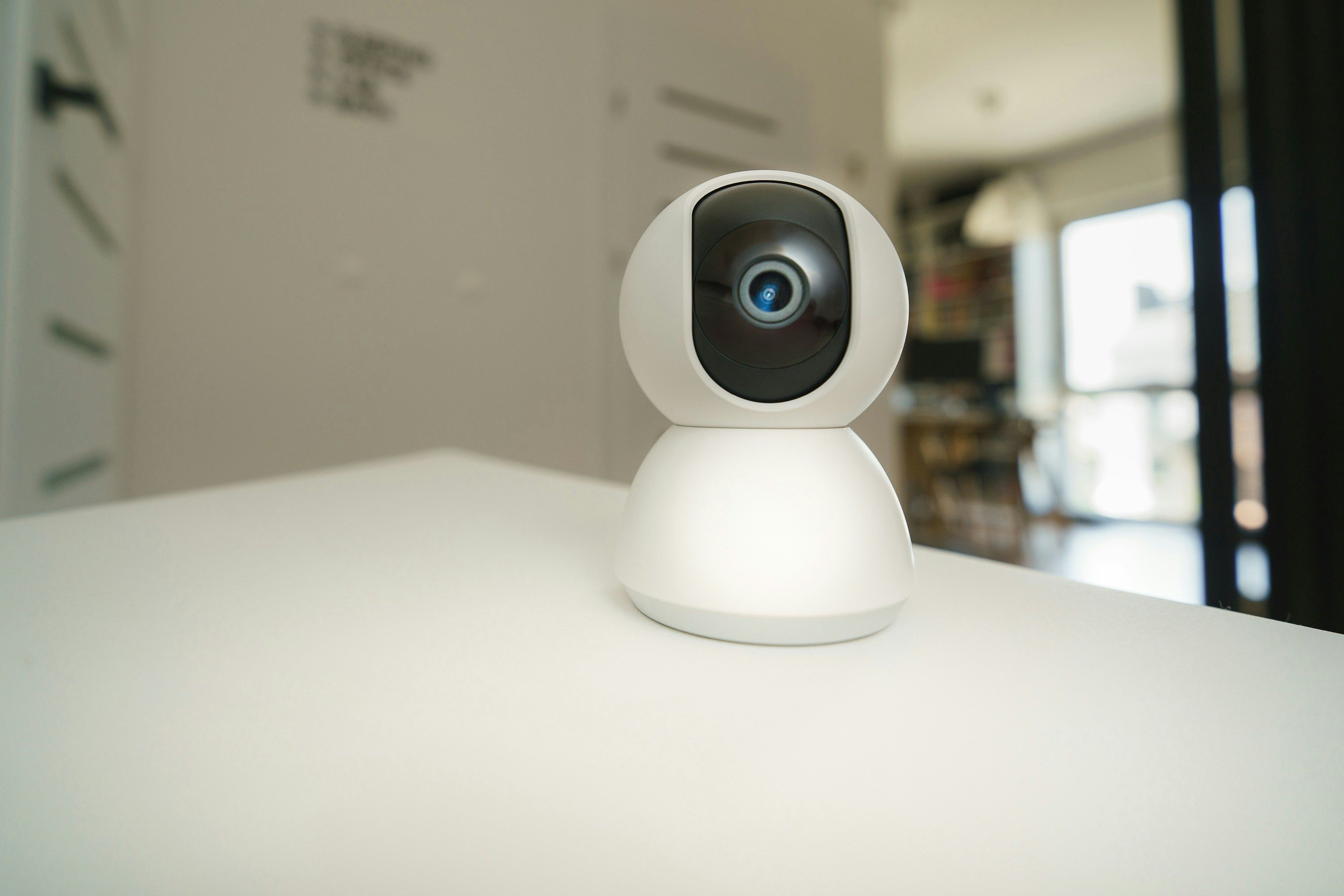
I still remember sitting in the office on my first day, feeling a little overwhelmed. One of the first things I noticed was the CCTV cameras. After years of working in the sector, I understand why they are there — and not just for child safety, though that matters enormously.
From studying psychology, I became deeply interested in the reliability of human memory, and what the research tells us is humbling. Loftus and Palmer's landmark 1974 study showed that even a single word can alter a person's recollection of an event (Loftus & Palmer, 1974). More broadly, research has consistently found that stress at the point of encoding can impair the accuracy of memory — and a residential family centre, for both parents and staff, is an inherently high-pressure environment (Deffenbacher et al., 2004). We are all, without realising it, capable of remembering events through the lens of our own perceptions, assumptions and emotional state in that moment.
That is why I always found it good practice to check the CCTV before writing up important observations — to ensure that what I recorded was fact rather than an unconscious reflection of my own bias. These are people's lives. The records produced in a residential family centre inform decisions made in court about whether a child stays with their family. Getting it right is not optional. Without CCTV, that kind of cross-checking simply is not possible.
That said, research has highlighted that mothers have spoken of the negative impact of 24-hour CCTV while breastfeeding and bathing their children, and the feeling of criminalisation that this kind of monitoring can generate (Roberts, 2021, cited in Shaughnessy, Ott and Smale, 2025). It is worth acknowledging that honestly. The debate around CCTV in these settings is not straightforward, and the experience of parents must always be taken seriously.
In the centre where I worked, CCTV was present throughout the communal spaces and bedrooms; the only rooms without it were the bathrooms. At night, staff would put a privacy screen around the bed so parents could have some privacy when sleeping.
What struck me more over time was just how ordinary the physical environment is. Residential family centres are generally normal houses, sometimes a converted property, sometimes a purpose-built space with self-contained flats. Families have their own private rooms and share common areas like kitchens, living spaces and a garden.
Parents are observed across all aspects of their daily life: feeding and bathing their children, managing routines, responding to distress, keeping their rooms clean, completing household chores that are assigned as part of the placement. After a review, typically at the six-week point, if it is safe to do so, parents may be given increasing independence, including time outside the centre without staff present.
Life in a centre is not purely about observation and assessment. The best centres offer activities that make the environment feel less institutional and more human — crafts, cooking sessions, movie nights, pamper evenings, yoga and sports. Weekend trips are planned and these are opportunities to observe parenting in different contexts, and they contribute to the overall picture of the assessment. They also matter for the wellbeing of the families themselves, who are living through what is, without question, one of the most difficult and stressful experiences of their lives.

Supporting Parents, Not Just Assessing Them
Something that often gets lost in conversations about residential family assessment centres is that the work is not purely evaluative. Yes, the assessment matters. Yes, the findings will inform decisions made in court. But the best centres hold both things at once, rigorous assessment and genuine support — and the two are not in conflict.
Research supports this approach. Studies have found that the most effective placements are those that respond to the therapeutic needs of new parents alongside parenting guidance, and are built on stability and support — emotionally, practically and institutionally (Luke and Sebba, 2014, cited in Shaughnessy, Ott and Smale, 2025).
In the centre where I worked, we were taught to see every parent who walks through the door as a diamond. They may arrive under enormous pressure, carrying the weight of their history, their circumstances and their fears about what the assessment might mean for their family. Yet the team's role is not to fix them. It is to hold the space, create the right conditions and actively facilitate their ability to shine.

That means direct work (planned, purposeful educational sessions) tailored to the individual needs of each parent. If a parent has experienced domestic violence, there might be a session exploring healthy relationships. If a parent is struggling with routines, direct work might focus on practical strategies and building confidence. Sessions are built around what each family needs, not a generic curriculum.
It also means holding space for parents to grow. Staff want families to stay together when it is safe to do so. That is the starting point — not suspicion, but hope. Teams work hard to support positive change, to notice progress, and to reflect that back to parents in a way that builds their confidence and capability.

But — and this is the part that makes the work so difficult — the child's needs are always at the heart of the assessment. A parent may be working hard, showing real commitment, making genuine progress. And still, the child cannot wait indefinitely for a parent to be ready. That tension, between wanting to support a parent and knowing that a child's timeline is not the same as an adult's, is something every practitioner in this field carries. Holding it well, with both empathy and clarity, is what good practice looks like.
How Long Does an Assessment Last?
Families are typically in centres for a fixed term, usually up to 12 weeks, during which time assessments of parenting capacity are made (Shaughnessy, Ott and Smale, 2025). This timeframe was established in the House of Lords case Re G [2005], in which Baroness Hale emphasised that an assessment should reflect the Children Act's emphasis on preventing delays and should last no more than two or three months. In practice, some placements are shorter and some are longer, depending on the complexity of the case and the direction of the assessment.
Throughout the placement, regular reviews take place — involving the family, the centre's team, the local authority social worker, and other relevant professionals. These reviews track progress against the placement plan and inform decisions about next steps.

How Are Centres Regulated?
Residential family assessment centres in England are regulated under the Care Standards Act 2000 and the Residential Family Centres Regulations 2002. They must register with Ofsted and are subject to regular inspection. Ofsted generally inspects new residential family centres within 12 months of registration, with subsequent inspections taking place within a three-year window (Gov.uk, 2024).
The National Minimum Standards for Residential Family Centres set out the baseline expectations for the quality of care, the assessment process, and the rights of the families being assessed. Centres found to be providing outstanding or good care are recognised as such in their Ofsted reports, and those findings are used by local authorities when deciding where to place families.
A Sector That Is Growing — and Facing Questions
Numbers have grown significantly. There are currently 110 residential family assessment centres in England, an increase of 12 since 2023/24 and double the number registered in 2020. Of the 17 new centres registered between March 2024 and March 2025, 88% were private providers (Shaughnessy, Ott and Smale, 2025).
The North West has seen a particularly sharp rise, growing from 2 registered centres in 2014 to 26 in 2024/25. London, which has historically had higher numbers than other regions, had 28 centres in 2024/25.
Alongside this growth, important questions are being asked. The Nuffield Family Justice Observatory has noted that as the number of centres has grown, there has been a matched increase in the number of services assessed by Ofsted as requiring improvement. Of the 96 registered centres that had received inspections as at March 2025, 17% either required improvement or were rated inadequate. This is an honest and important caveat. The sector is growing quickly, and the quality of provision is variable. Choosing the right centre, and ensuring that assessments are carried out to the highest standard, matters enormously for the children and families at the centre of these decisions.

Conclusion
Residential family assessment centres occupy a unique and vital space in the child protection system. They are places where families in crisis are given the opportunity to demonstrate their capacity to parent — and where the evidence that shapes life-changing court decisions is gathered, day by day, through careful observation and skilled professional practice.
For parents, they can feel daunting. For staff, they are demanding, meaningful and complex environments to work in. And for the children at the heart of every assessment, the quality of what happens in those centres matters more than most people ever see.
References
- Care Standards Act 2000. https://www.legislation.gov.uk/ukpga/2000/14/contents
- Deffenbacher, K. A., Bornstein, B. H., Penrod, S. D. and McGorty, E. K. (2004). A meta-analytic review of the effects of high stress on eyewitness memory. Law and Human Behavior, 28, 687–706. https://doi.org/10.1007/s10979-004-0565-x
- Department for Education. (2013). Residential Family Centres National Minimum Standards. https://assets.publishing.service.gov.uk/media/5a7574c7ed915d731495a184/2013_Residential_Family_Centres_NMS.pdf
- Gov.uk. (2024). Introduction to residential family centres. https://www.gov.uk/government/publications/introduction-to-residential-family-centres/introduction-to-residential-family-centres
- Kent County Council v G and others (FC) [2005] UKHL 68 (24 November 2005). https://www.bailii.org/uk/cases/UKHL/2005/68.html
- Loftus, E. F. and Palmer, J. C. (1974). Reconstruction of automobile destruction: An example of the interaction between language and memory. Journal of Verbal Learning and Verbal Behavior, 13(5), 585–589. https://doi.org/10.1016/S0022-5371(74)80011-3
- Ofsted. (2025). Children's social care in England 2025: Main findings. https://www.gov.uk/government/statistics/childrens-social-care-in-england-2025/main-findings-childrens-social-care-in-england-2025
- Ofsted Social Care Inspection Blog. (2025). Finding out more about residential family centres. https://socialcareinspection.blog.gov.uk/2025/09/03/finding-out-more-about-residential-family-centres/
- Shaughnessy, C., Ott, E. and Smale, E. (2025). Residential family assessment centres: Data trends and questions. Nuffield Family Justice Observatory. https://www.nuffieldfjo.org.uk/wp-content/uploads/2025/08/Data_trends_22-08-25.pdf
- The Residential Family Centres Regulations 2002. https://www.legislation.gov.uk/uksi/2002/3213/contents/made