



Social CareA Guide to the Residential Family Centres National Minimum Standards

· 11 min read
Have you just started working in a residential family assessment centre, or are you looking for a clear refresher on the National Minimum Standards? This short guide turns the standards into everyday actions so you can see how they shape what you do on shift.
Have you just started working in a residential family centre, or found yourself thinking, “I know the standards are important… but what do they actually mean on shift?” You’re not alone. The National Minimum Standards can feel dense at first, especially when you’re juggling a new role, parents, children, paperwork, and time pressures all at once.
At their heart, the standards are about getting the basics right every day. They set clear expectations for safe, fair and evidence-based assessments, helping to protect children, support parents, and ensure the work you do stands up to scrutiny. When you understand the purpose behind them, they stop feeling like rules to memorise and start feeling like a framework you can lean on in day-to-day practice.
This guide focuses on the standards you’re most likely to encounter on shift. Each section explains what the standard is asking for, followed by a simple “what this looks like on shift” snapshot to show how it translates into real actions. Where it helps, I’ve also included examples from my own experience working in a residential family centre, reflecting routines and situations that will feel familiar to many professionals.

Key takeaways (the five things to remember)
- Child welfare leads every decision. Every assessment and action must prioritise the child.
- Listen and record. Parents’ and children’s views matter — ask, record and reflect them.
- Safeguarding is active, not passive. Know the reporting route and act if you see risk.
- Quality records make assessments credible. Timely, factual notes are the assessor’s evidence.
- Teams need training and supervision. Good induction, ongoing learning and reflective supervision keep practice safe and fair.
Standards in practice — what you’ll actually do
The National Minimum Standards set out 21 areas of practice that underpin how residential family centres operate. Taken together, they shape how children are safeguarded, how parents are supported, and how assessments are carried out fairly and consistently.
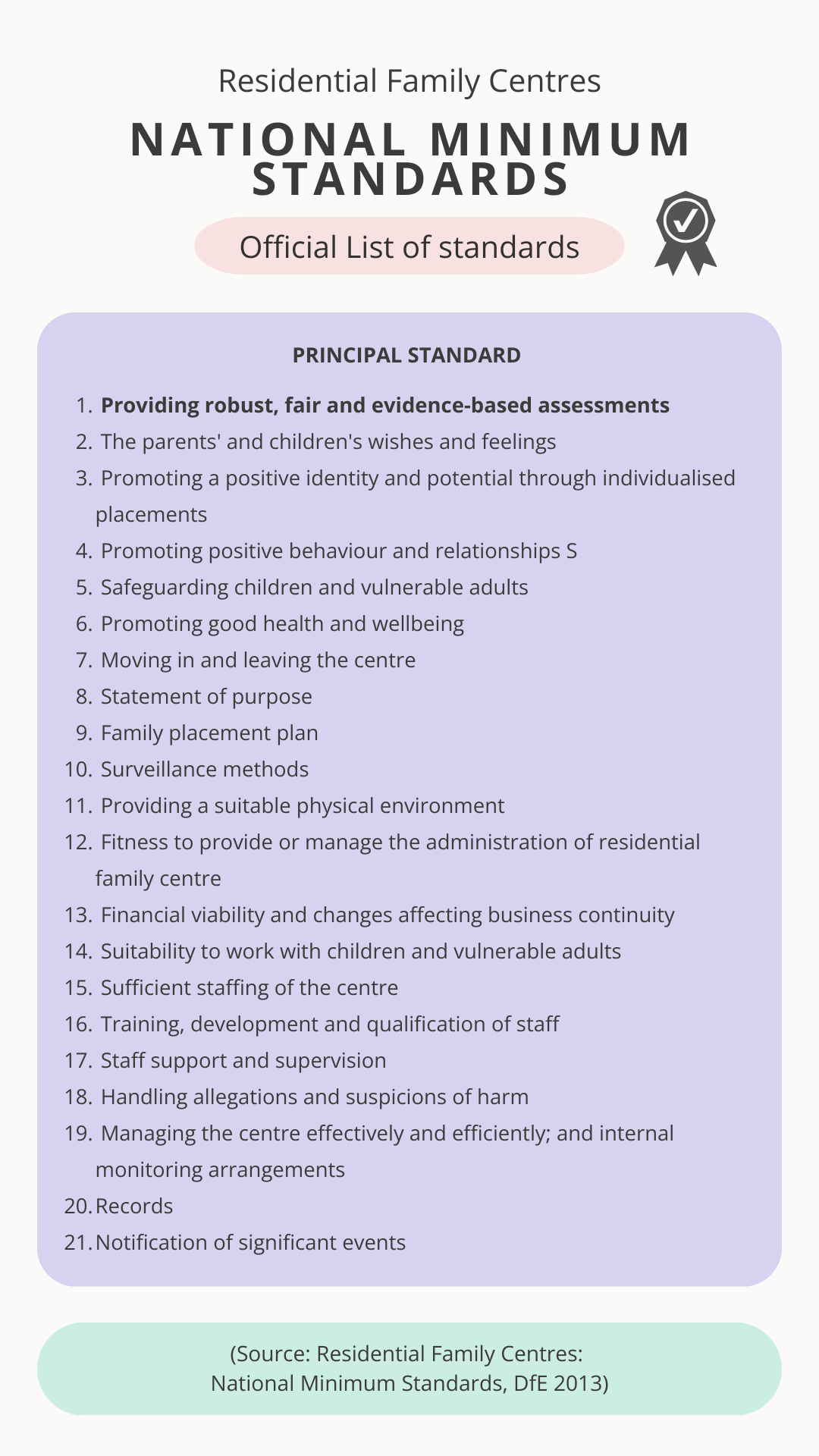
The full list of standards can feel daunting when you see them all together.
Rather than working through all 21 standards in order, the sections below group them into themes. For each theme, you’ll see the official standard name alongside a practical explanation and some examples.
Fair, evidence-based assessments
(Principal Standard — Providing robust, fair and evidence-based assessments)
What the standard asks:
- Assessments must be robust and impartial, focusing on evidence rather than assumptions.
- The child’s welfare and best interests must remain central throughout the assessment.
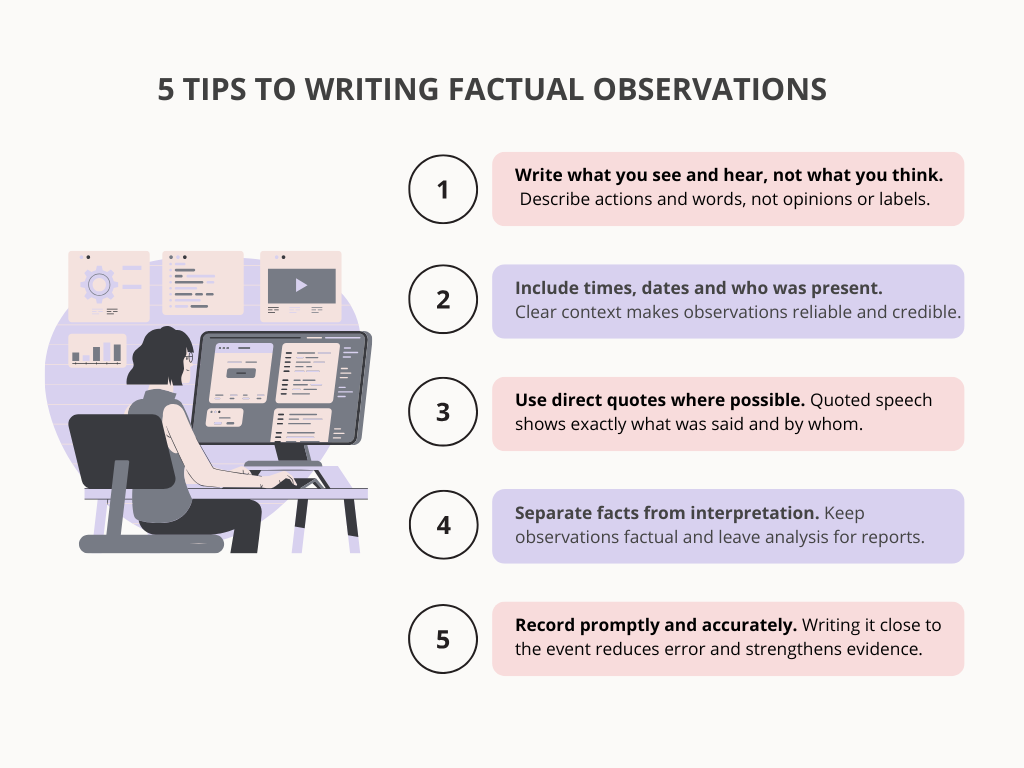
- Reports must clearly separate observed fact from interpretation and hypothesis.
What this looks like on shift:
When you write an observation, stick to the facts. For example: “At 10:12, parent left the toddler alone by the cooker for two minutes; child was crying.” Avoid words like “neglectful” — this could be hurtful to a parent and drawing conclusions is the assessor’s role.
Time-stamps, witnesses and context (who was present, what else was happening) all turn everyday notes into defensible evidence later on.
Listening to parents and children
(Standard 2 — The parents’ and children’s wishes and feelings)
What the standard asks:
- Parents’ and children’s views, wishes and feelings must be actively sought and recorded.
- Families must be given access to independent advice and advocacy.
- Complaints and concerns must be handled fairly and without fear of reprisal.
What this looks like on shift:
Start with open questions like “How was last night for you?” and record short verbatim comments where possible. If a child is old enough, offer them a quiet space to talk about how something felt for them. Make sure parents know how to access advocacy and how to raise concerns. These small actions help ensure voices are visible within the assessment, not just at review points.
Example from my experience:
In my previous workplace, this standard was built into the weekly routine. Every Sunday we held a sit-down with all parents, giving them space to reflect on the week together. Parents were asked what had gone well, what could be improved, and what activities or outings they would like to do in the week ahead. Feedback from these sessions was recorded and fed back into daily practice and planning, helping parents feel heard and giving staff clear, recorded evidence of parents’ views in action.

Promoting positive identity and potential
(Standard 3 — Promoting a positive identity and potential through individualised placements)
What the standard asks:
- Support must be tailored to cultural, linguistic and disability-related needs.
- Parents’ and children’s identity, self-esteem and abilities should be actively promoted.
- Placements should help parents demonstrate strengths and build on existing routines.
What this looks like on shift:
Notice and respect family routines and culture — ask about food preferences, faith practices or home languages and reflect these in daily care. If a parent struggles with reading, offer plain-language, visual or verbal feedback. Small adjustments can make a significant difference to engagement and confidence.
Example from my experience:
Based on my experience working in a residential family centre, this standard was supported in practical ways. Feedback was sometimes provided on coloured paper or read aloud to parents to improve accessibility. Different learning styles were catered for during direct work sessions such as using videos or games, or visual or kinesthetic learners.
Parents were given opportunities to support new arrivals or return to encourage current residents, helping to build confidence and self-esteem. Where appropriate, parents could also lead activities linked to their interests or skills, such as cooking sessions, art sessions or group exercise, allowing them to demonstrate strengths in a safe, supported way.

Positive behaviour and relationships
(Standard 4 — Promoting positive behaviour and relationships)
What the standard asks:
- Staff must build respectful, honest relationships with parents.
- Parents should be supported to develop consistent and positive parenting approaches.
- Behaviour management should focus on safety, learning and reflection.
What this looks like on shift:
Use coaching moments. Acknowledge what went well (“You stayed calm and that helped the baby settle”) and offer short, practical suggestions. If tensions rise, follow agreed de-escalation steps and record incidents factually so assessors can review patterns and responses.
Example from my experience:
In practice, building positive relationships also means creating opportunities for fun and connection. Activities such as group picnics, trust-building exercises, pamper nights, movie evenings, crafting sessions, and quizzes helped parents relax and build rapport with staff. They also felt more secure when behaviour was later challenged or positive parenting strategies were introduced.”

Safeguarding and protection from harm
(Standard 5 — Safeguarding children and vulnerable adults)
What the standard asks:
- Children must be protected from abuse, neglect and avoidable harm.
- Clear safeguarding procedures and reporting routes must be followed.
- Staff must be trained to recognise risk and respond quickly.
What this looks like on shift:
Know your safeguarding process without needing to look it up. If you see risk, raise it immediately, increase supervision and follow the centre’s child protection procedures. Record what you observed and what action you took. Prompt responses and clear records are essential.
Example from my experience:
I found it valuable to seek a second opinion from a trusted colleague when unsure. Working in an environment where it was safe and encouraged to ask for guidance and learn from more experienced staff made responding to potential risks more effective and supported ongoing professional development.

Health and wellbeing
(Standard 6 — Promoting good health and wellbeing)
What the standard asks:
- Physical and emotional health must be actively promoted.
- Families must have access to healthcare, appointments and medication support.
- Health needs should be reflected in placement planning.
What this looks like on shift:
Log appointments, support medication routines and note concerns about sleep, nutrition or emotional wellbeing. If a referral is needed, flag it so it can be added to the placement plan. Everyday health conversations often become key assessment evidence.
Example from my experience:
In my previous role as wellbeing champion, I focused on promoting health and wellbeing across the centre. Practical strategies included a calm box with emotional support resources, yoga and breathwork sessions and monthly wellbeing challenges.
Key workers carried out weekly check-ins, parents had access to therapy, daily nature walks and support was provided for healthcare appointments. These activities supported parents physically and emotionally while improving quality of care for children.
Safe, welcoming environments and proportionate monitoring
(Standards 10–11 — Surveillance methods; Providing a suitable physical environment)
What the standards ask:
- The environment must be safe, suitable and as homely as possible.
- Health and safety systems must be in place and practised.
- Any monitoring must be transparent, proportionate and respectful of privacy.
What this looks like on shift:
Involve parents in daily routines where appropriate. If monitoring is used, explain clearly what is recorded and why. Report environmental risks immediately and record what action was taken. Families should feel safe, not watched.
Example from my experience:
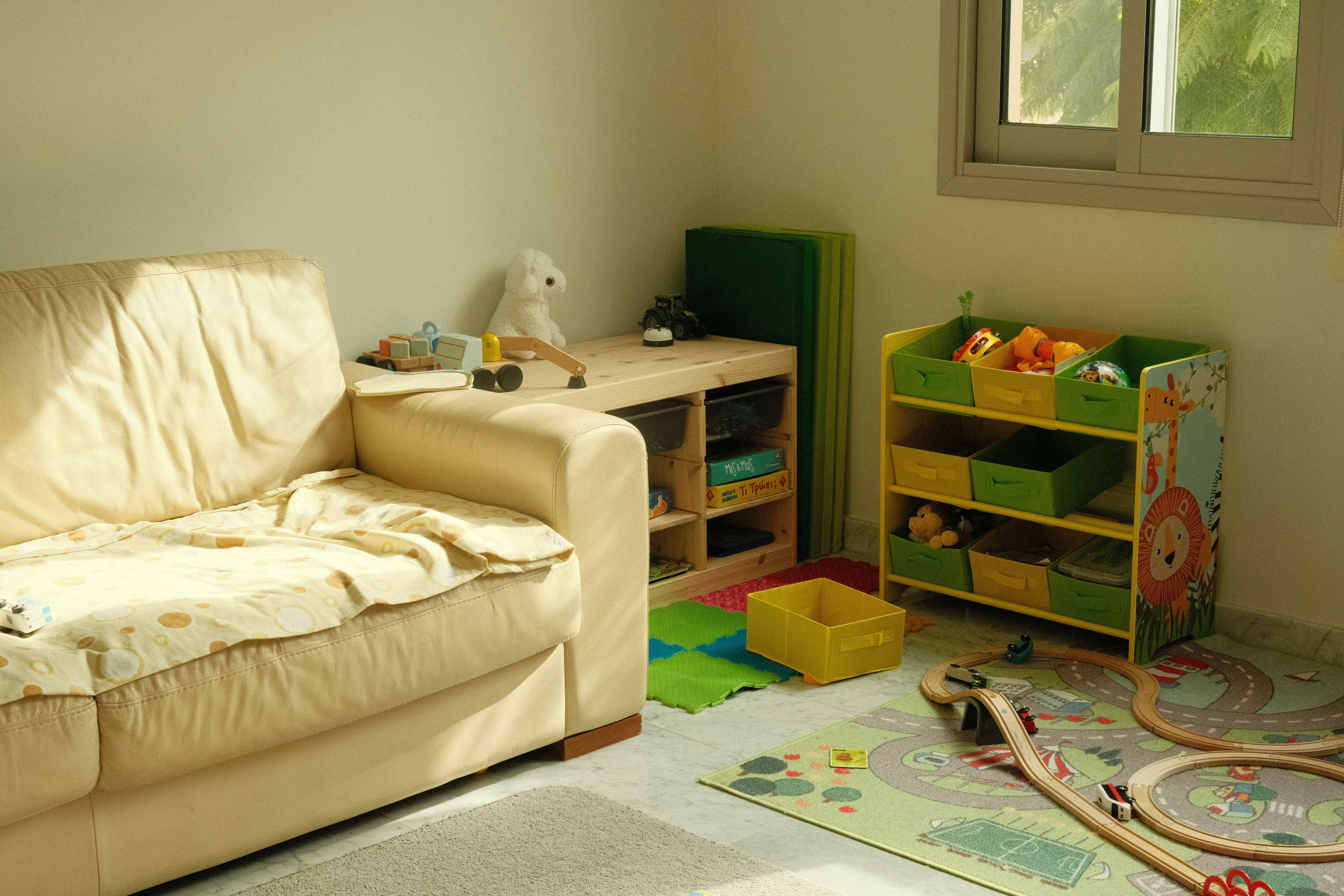
In the centre I worked in, the environment was designed to help parents feel more relaxed and supported. While parents were often still stressed, the space was clean, safe, well-equipped, and cosy, with soft lighting, bean bags, comfortable sofas, play corners, and a garden. It created a welcoming, positive atmosphere for families.
Training, supervision and staff support
(Standards 16–17 — Training, development and qualification of staff; Staff support and supervision)
What the standards ask:
- Staff must receive induction and mandatory training.
- Ongoing development and qualifications must be supported.
- Supervision and appraisal must promote reflective practice and wellbeing.
What this looks like on shift:
Bring learning needs to supervision, keep training up to date and use mentoring or shadowing where available. Managers should ensure new or agency staff are supported before working independently.
Example from my experience:
My centre supported us with six-weekly supervision and quarterly training. The most valuable aspect, however, was the open culture where we could learn from each other and ask managers anything. To make sure I got the most from supervision, I always wrote down what I wanted to discuss first, a simple trick that made the conversations much more productive.
Accountability, records and quality assurance
(Standards 18–21 — Handling allegations and suspicions of harm; Managing the centre effectively and efficiently; Records; Notification of significant events)
What the standards ask:
- Allegations must be handled promptly and transparently.
- Providers must monitor quality and act on concerns.
- Records must be accurate, confidential and significant events reported.
What this looks like on shift:
If an allegation arises, follow procedure immediately. Keep records clear, factual and up to date. Know which incidents must be notified externally and ensure managers are informed without delay. Strong oversight relies on good information.
Connecting to common inspection findings:
Understanding the standards is one thing; proving you follow them is another. A recurring theme in Ofsted inspection reports is the gap between work done in practice and work that is clearly documented. Inspectors must see evidence to judge that standards are met, and without a solid paper trail, even good practice can appear unsubstantiated.
Some examples of identified issues include:
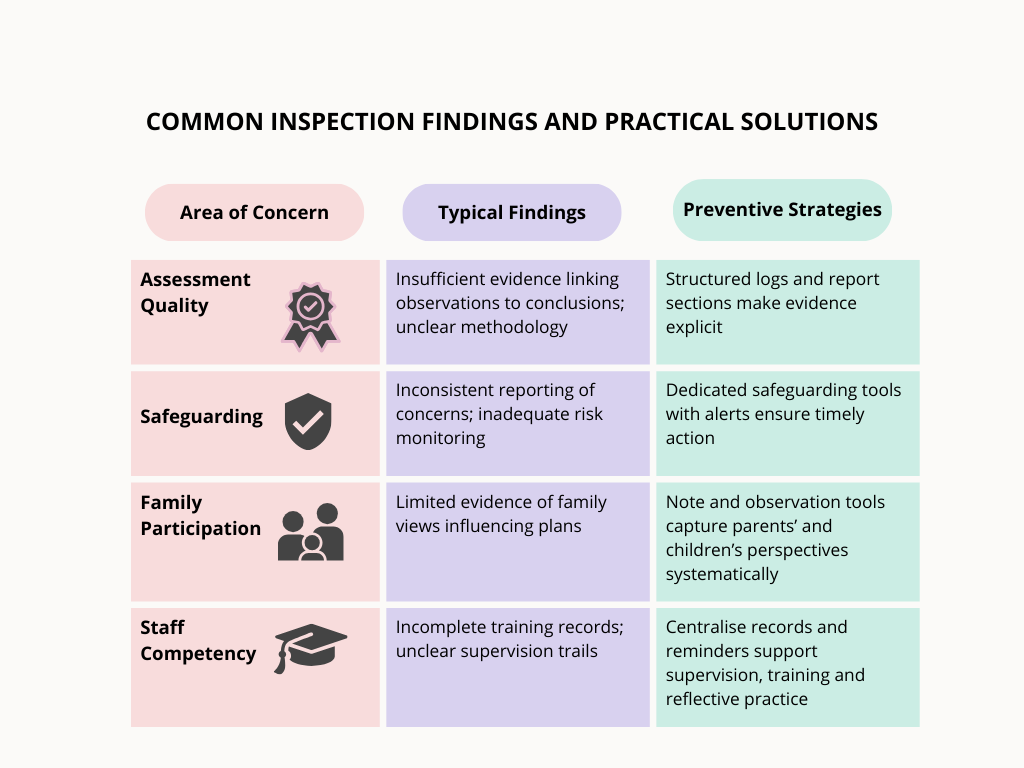
Effective tools are crucial for translating standards into consistent practice. Yet, practitioners often face systems that haven't been designed for the complexities of family assessment. This can make compliant documentation unduly difficult and increase the risk of the evidence gaps that inspectors sometimes identify.
How FamilyAxis supports day-to-day practice
Having worked in centres and faced these documentation challenges myself, I knew there had to be a better way. That's why we built FamilyAxis, a software for residential family centres.
We've designed it with the National Minimum Standards in mind, aiming to reduce the administrative stress on teams and create a calmer, more transparent experience for parents.
Practical tools we've implemented:
- Child-focused notes: Each child’s profile has a life story and notes section so experiences, milestones, and wishes are consistently logged.
- Safeguarding made visible: Concerns can be recorded quickly and escalated to the right people with alerts, ensuring nothing is missed.
- Clear evidence and reports: Observations, direct work, and other evidence are captured alongside space for analysis, helping make assessments transparent and defensible.
Conclusion
The National Minimum Standards aren’t just rules — they’re a practical framework to help professionals provide safe, fair, and evidence-based care while supporting parents and children. Keep the five key takeaways in mind: prioritise the child, listen and record, act on safeguarding, maintain quality records, and make use of team training and supervision.
Turning standards into everyday habits doesn’t have to feel overwhelming. Clear observations, timely reports, and following safeguarding flows are all actions you can embed into your daily routine. By understanding how standards translate into real-life practice, and with systems that support clear documentation and communication, teams can focus on creating safe and supportive environments.
Sources
- Department for Education. (2013). Residential family centres: National minimum standards. GOV.UK.https://www.gov.uk/government/publications/residential-family-centres-national-minimum-standards
- Office of the King's Printer of Acts of Parliament. (2002). The Residential Family Centres Regulations 2002. Legislation.gov.uk.https://www.legislation.gov.uk/uksi/2002/3213/contents
- Ofsted. (2025, April 4). Social care common inspection framework (SCCIF): Children’s homes. GOV.UK.https://www.gov.uk/government/publications/social-care-common-inspection-framework-sccif-childrens-homes/social-care-common-inspection-framework-sccif-childrens-homes
- NSPCC. (2024, June). What makes a good assessment? | Practice points. https://learning.nspcc.org.uk/research-resources/practice-points-series/assessments
- NSPCC. (2024, March). Assessments: learning from case reviews. https://learning.nspcc.org.uk/research-resources/learning-from-case-reviews/assessments